
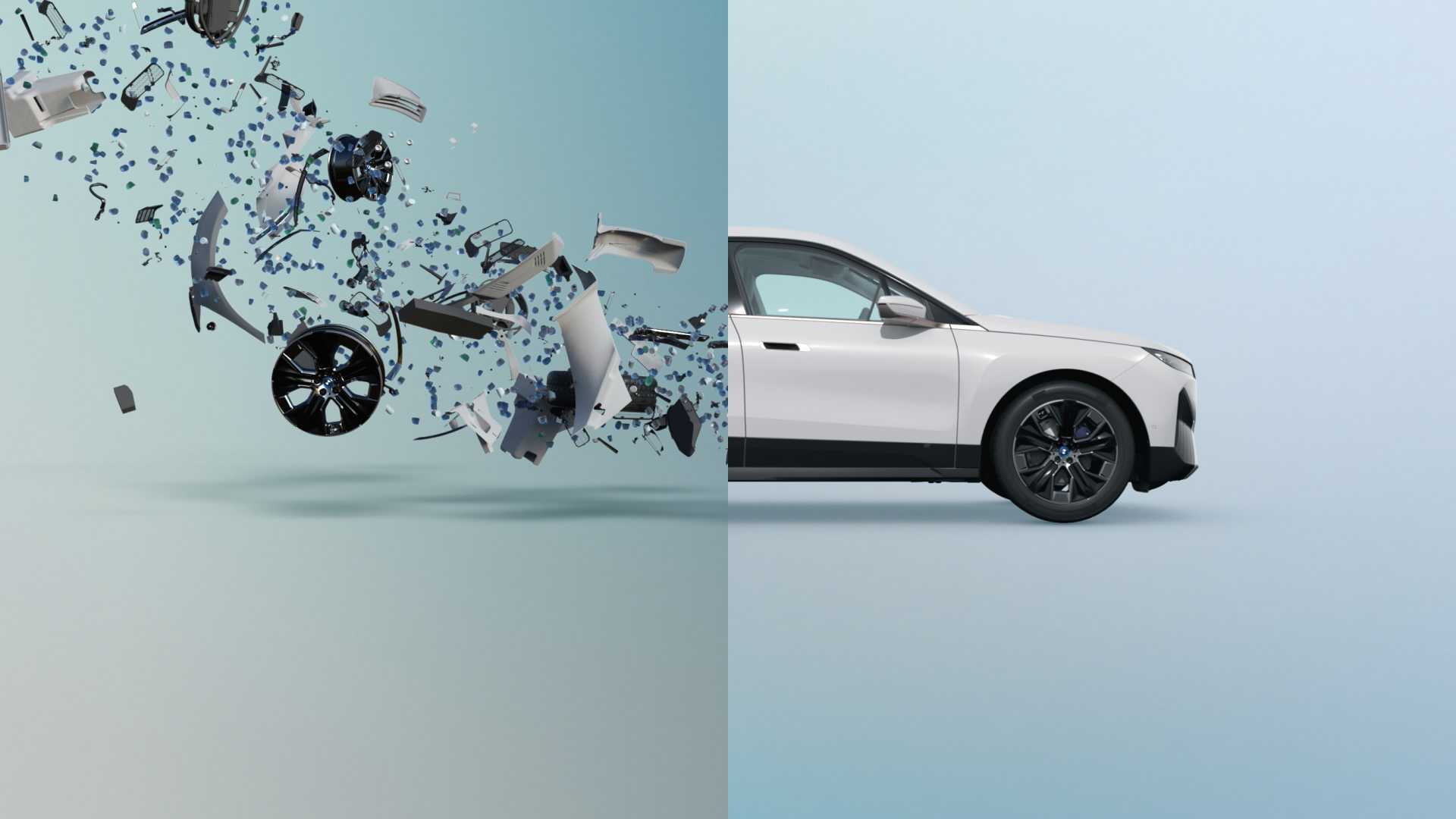
BMW Group has reported a sharp increase in the amount of material from end-of-life vehicles that could, in principle, return to new automotive applications. In an announcement dated August 10, 2026, the company said its Car2Car research project raised the potential “Car2Car rate” from 6% to 51% when additional sorting and processing steps were introduced.
The result comes from a consortium involving automotive manufacturers, material producers, recyclers and academic institutions. BMW defines the Car2Car rate as the percentage of material recovered from an end-of-life vehicle at a quality high enough for reuse in new industrial applications. That definition is narrower than a conventional recycling figure: it asks whether material can return to a comparable industrial loop, rather than simply being recycled into a lower-grade product.
The project compared existing market-standard processing with expanded routes designed to improve material separation. Under the initial conditions, which involved minimal compulsory dismantling, the overall rate across five material groups was 6%. With improved pre-sorting, modified shredding, material classification, sensor-based sorting and more precise separation of aluminium alloys, the potential rate increased to 51%.
The strongest gains were recorded for metals. BMW reported that the potential rate for steel increased from 1% to 81%, while aluminium rose from 23% to 52% and copper from 48% to 68% under the expanded conditions. The figures describe the research project’s recovery potential rather than a claim that these rates are already standard across the vehicle-recycling market.
Steel provided the clearest industrial demonstration. Copper-bearing impurities from wiring, connectors and other vehicle components can reduce the quality of shredded steel. The project used an additional sorting step to reduce that contamination, then produced flat steel that met the requirements for modern automotive applications. BMW said the recovered steel was taken into industrial production after material and quality testing.
The project also moved beyond laboratory analysis. In a field test at BMW Group Plant Leipzig, more than 100,000 series parts were produced using the recovered steel and installed in vehicles. BMW describes this as evidence that material from end-of-life vehicles can travel through a real industrial value chain and become part of new vehicle production. The test does not, however, establish that the same process is currently available at scale throughout the industry.
The announcement is relevant to electric mobility, but its scope should be stated precisely. Car2Car is not presented as a battery-recycling trial, and BMW does not claim that the 51% figure applies specifically to electric vehicles. The project concerns vehicle materials more broadly, including steel, aluminium, copper, plastics and glass. Its indirect importance for electrification is that the environmental performance of future electric fleets will depend on the circularity of the complete vehicle, not only on the management of its battery at the end of service.
BMW’s results also show where the technical work remains unfinished. Plastics and glass did not achieve comparable progress because modern vehicles contain varied materials, composite structures and demanding quality requirements. The company says further development will be needed in vehicle design, dismantling, sorting and recycling before high-quality loops for those materials can be consistently delivered.
BMW also cautions that the reported rates were achieved under optimal processing and sorting conditions. Wider deployment would require investment in dismantling, separation and recycling infrastructure, reliable access to end-of-life vehicles, viable business models and regulatory frameworks that support transparent material flows. The company’s own release therefore frames the project as evidence of technical feasibility and a data basis for future development, not as proof that a closed-loop automotive system is already operating at commercial scale.
For the broader automotive sector, the significance of the announcement lies in the distinction between recyclability and usable circularity. A material may be recoverable, yet still fail to meet the quality, economic or logistical requirements for a new vehicle component. Car2Car focuses on that gap. Its findings suggest that better process engineering can substantially improve the value of vehicle scrap, while also showing that the transition from demonstration to routine industrial practice will require coordinated changes across manufacturers, recyclers, material suppliers and policymakers.
The full findings and the project’s limitations are set out in the BMW Group PressClub announcement. For now, the verified takeaway is measured but important: high-quality material loops for several automotive metals appear technically achievable under expanded processing conditions, while the infrastructure and market arrangements needed to make them routine are still being developed.