
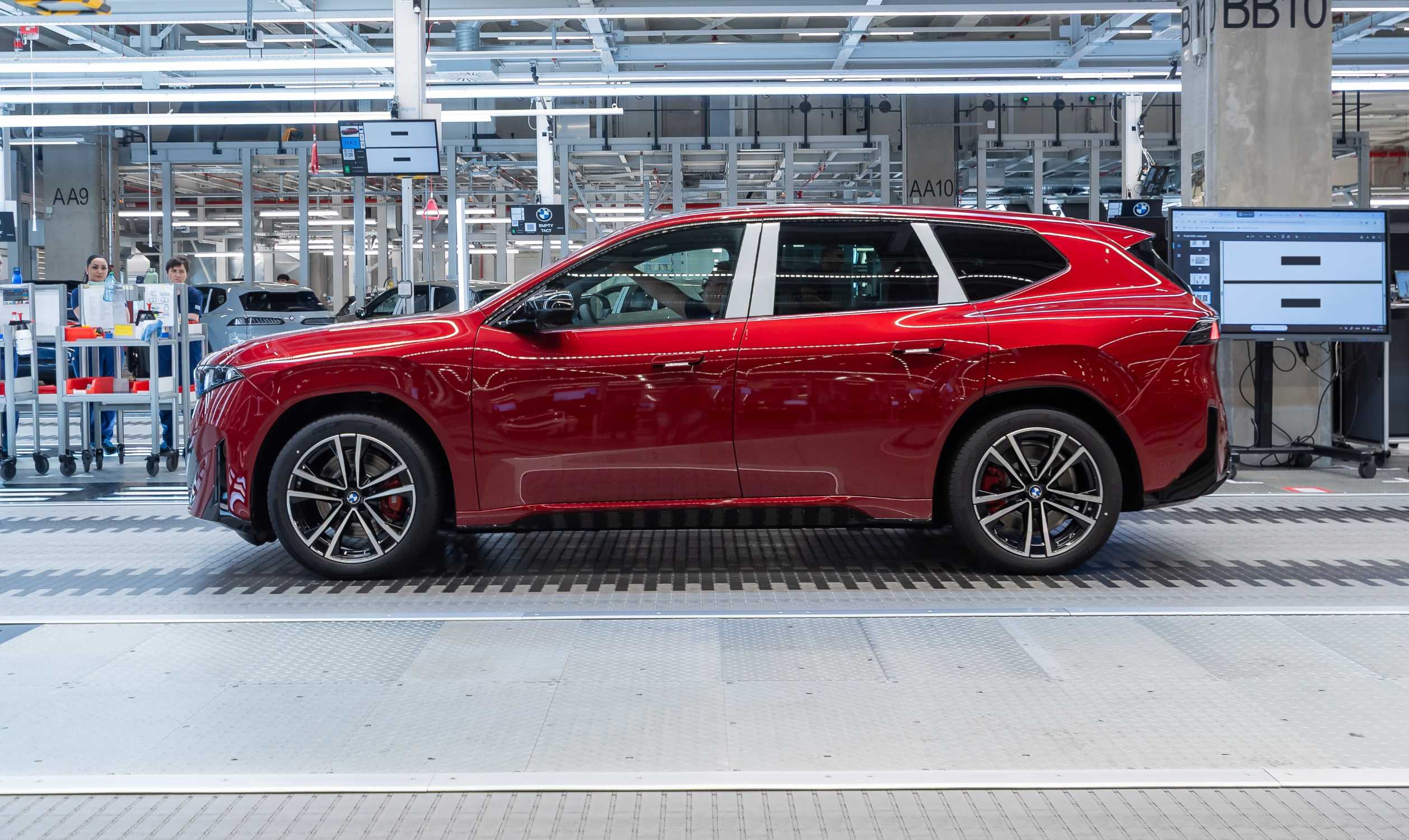
BMW Group’s latest quarterly disclosure points to a widening regional split in electric-vehicle demand. In an official release dated July 30, 2026, the automaker reported that fully electric vehicle deliveries in Europe increased 37.9% year on year during the second quarter, while a sharp decline in China weighed on overall group performance.
BMW said it delivered 116,807 fully electric vehicles worldwide between April and June, up 5.2% from the same period in 2025. That represented 19.8% of the group’s total deliveries during the quarter. The first-half figure was 204,295 battery-electric vehicles, down 7.4% year on year, showing that the quarterly improvement did not erase the weaker start to 2026.
Europe becomes the clearest growth market
The strongest electric-vehicle momentum came from BMW’s European sales region. The group reported 81,500 battery-electric deliveries in Europe during the second quarter, compared with the same period a year earlier. Fully electric vehicles accounted for 31.3% of deliveries in the region, up from 24.4% in the second quarter of 2025.
BMW linked the regional performance to the launch of the iX3, the first model based on its Neue Klasse vehicle architecture. The company said demand for the electric SUV remained strong and that the model was on track to reach 100,000 orders since its sales launch. That figure is an order milestone reported by BMW; it is not the same as completed deliveries and does not independently measure the model’s market share.
The group’s overall European deliveries also grew. BMW reported a 7.6% increase in the region during the second quarter, while deliveries in the United States rose 11.9%. The picture was materially different in China, where second-quarter deliveries fell 30.2% to 117,815 vehicles. BMW attributed the pressure to the negative market environment and intensifying competition.
Neue Klasse becomes the centre of BMW’s EV strategy
The figures give an early view of how BMW’s Neue Klasse programme is translating into sales. The iX3 entered the European market earlier in 2026, and the company has positioned it as the first of a new generation of battery-electric models built around revised vehicle architecture, software and electric-drive technology.
BMW also said that the second Neue Klasse model, the new BMW i3, attracted strong demand after early ordering opened for its Launch Edition in June. The announcement does not provide a separate order total for the i3, so the company’s broader statement should not be read as a confirmed delivery or registration result for that model.
Electric models from MINI also contributed to the group’s transition. BMW said fully electric vehicles represented 36.9% of MINI deliveries during the first half of 2026, up from 34.3% in the first half of 2025. That result places MINI’s electric mix above the BMW Group average, although the brands operate with different product ranges and regional sales profiles.
Growth in EVs did not offset wider pressure
Despite the improvement in European battery-electric deliveries, BMW’s financial results show that electric growth is taking place inside a more difficult business environment. Group pre-tax earnings fell 35.1% in the second quarter to €1.697 billion, while first-half pre-tax earnings declined 29.4% to €4.045 billion. The automotive segment’s EBIT margin was 2.3% in the quarter.
BMW also reported 590,947 total vehicle deliveries worldwide in the second quarter, down 4.9% from a year earlier. For the first half, global deliveries reached 1,156,727 vehicles, a 4.2% decline. The company said lower sales volumes, competition and market conditions in China affected the year-on-year comparison.
That contrast matters for interpreting the release. The announcement supports a specific conclusion: BMW’s reported battery-electric deliveries improved in Europe during the quarter, and the company says its Neue Klasse products are building demand. It does not establish that the group’s global EV business is growing at the same rate, nor does it demonstrate that the new platform has already improved profitability.
What the disclosure confirms
BMW’s results provide a verified company account of delivery trends, regional performance and order momentum through June 2026. They also show why electric-vehicle progress cannot be assessed from one headline figure alone. European BEV deliveries rose strongly, but first-half global BEV deliveries declined, while China remained a major drag on the group’s wider results.
The next relevant evidence will be the conversion of Neue Klasse orders into completed deliveries and the performance of additional models such as the BMW i3. Until those results are reported, the clearest reading is that BMW’s electric transition is gaining traction in Europe while remaining exposed to regional demand, competition and broader market conditions.