
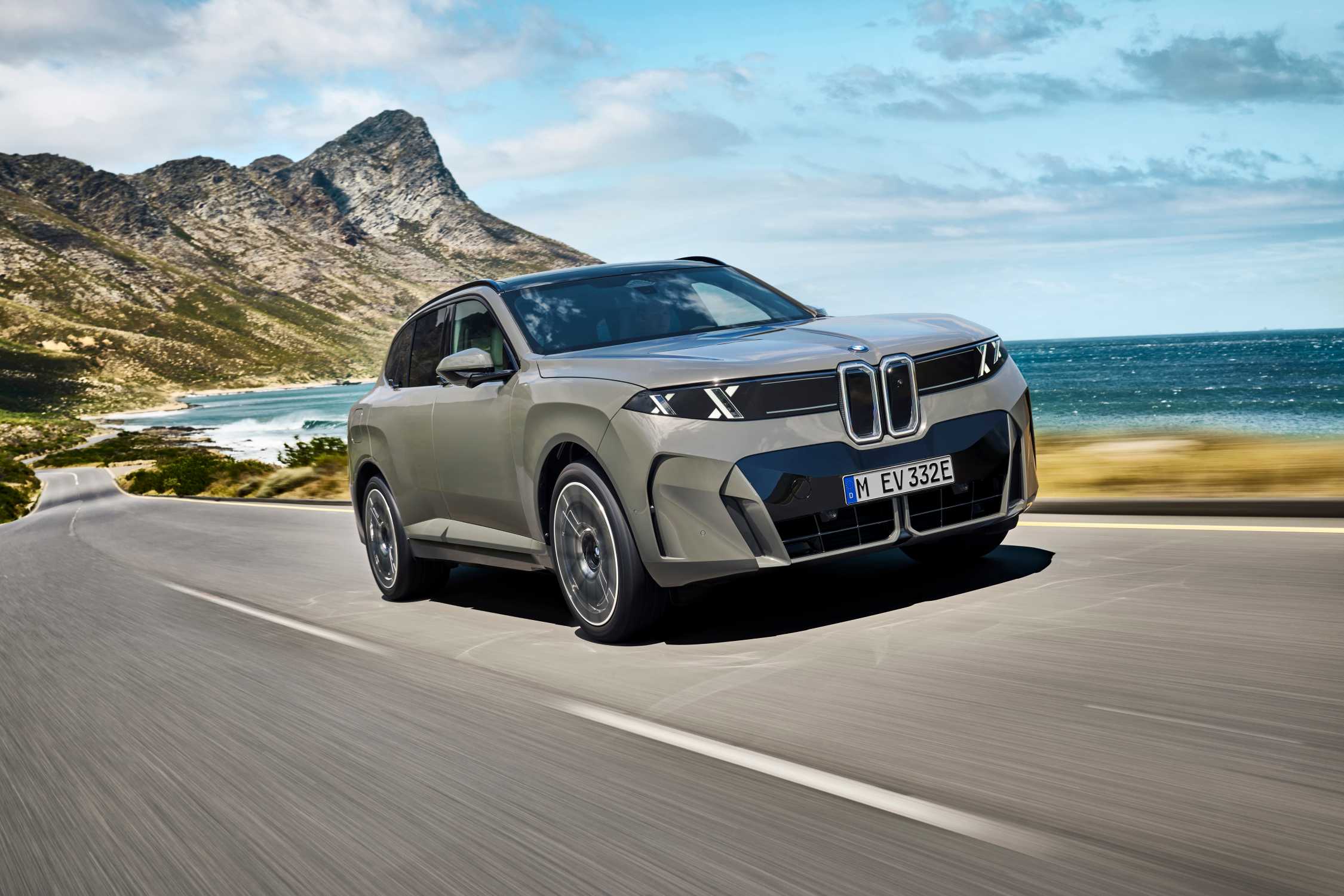
BMW has unveiled the fifth-generation X5, introducing a broader powertrain strategy that combines combustion, hybrid, battery-electric and hydrogen technologies within the same model family. The official BMW X5 press kit describes the new vehicle as the brand’s first model offered with five different drive system types.
The announcement is significant because the X5 is not moving to a single propulsion technology. Instead, BMW is using its large sports activity vehicle to present a multi-track approach to electrification. Customers will be able to choose petrol or diesel versions with 48-volt mild-hybrid technology, plug-in hybrid models, the fully electric BMW iX5 and, at a later stage, the BMW iX5 Hydrogen.
The electric iX5 takes technology from the Neue Klasse
The battery-electric BMW iX5 will be the first fully electric X5. BMW says the iX5 60 xDrive will offer a range of up to 845 kilometres, or 525 miles, while using the company’s sixth-generation eDrive technology. The figure is a manufacturer claim for the announced model and should not be confused with an independent road test.
The iX5 will also use an 800-volt electrical architecture designed to support faster charging. BMW says the vehicle will include practical bidirectional charging, allowing energy to flow in both directions between the vehicle and compatible equipment. The company has not announced every market-specific charging detail in the press kit, so final customer specifications may vary by region and configuration.
Another notable change is the use of cylindrical battery cells with a height of 120 millimetres. BMW says these cells will be installed in the high-voltage battery of the new iX5 for the first time. The announcement links the electric SUV to the wider technology direction of the Neue Klasse, which also includes BMW’s Panoramic iDrive display and the BMW Operating System X.
One X5, five propulsion routes
BMW’s approach gives the new X5 an unusually wide technical spread. Petrol and diesel models remain part of the range, with 48-volt mild-hybrid technology used to support efficiency and everyday operation. Plug-in hybrid versions will provide another option for drivers who want electric driving capability while retaining an internal-combustion engine.
The iX5 represents the most direct move into zero-tailpipe-emission driving within the family. The hydrogen-powered X5 is more experimental in timing: BMW says the iX5 Hydrogen is intended to become its first production vehicle with a hydrogen drive, but its market launch is planned for a later stage. The company’s announcement does not provide a confirmed launch date for that version.
This structure reflects the different conditions BMW expects to encounter across global markets. Charging access, local energy systems, customer requirements and regulatory conditions do not develop at the same pace everywhere. Offering several drive technologies allows BMW to continue electrifying the X5 while keeping other propulsion routes available during the transition.
Production begins in the United States
Series production of the fifth-generation X5 is scheduled to begin at BMW Group Plant Spartanburg in South Carolina in August 2026. The plant has produced the X5 since the model’s launch in 1999, and BMW says the new iX5 will become the first all-electric vehicle manufactured there.
BMW is also building a sixth-generation high-voltage battery facility next to the Spartanburg plant for the electric model. According to the company, the new battery factory requires no fossil fuels for normal operations. That detail gives the X5 announcement an industrial dimension: the electrification programme concerns not only the vehicle itself, but also the facilities producing its battery system.
The first variants of the new X5 are scheduled for market launch in late November 2026. BMW says the all-electric and plug-in hybrid versions will follow in early 2027. The announcement does not provide pricing or a complete market-by-market availability schedule, so buyers will need to wait for regional information before comparing final configurations.
What the announcement means for electric mobility
The new X5 does not present electrification as a single, uniform path. Instead, BMW is placing the battery-electric iX5 inside a family that also includes hybrids, conventional powertrains and a future hydrogen option. For an established premium SUV, that makes the propulsion strategy itself part of the product story.
The electric model’s headline features are its announced range, 800-volt architecture, bidirectional charging capability and new cylindrical-cell battery. Its production location is equally important: BMW is preparing Spartanburg to build both the vehicle and the batteries that power it. As the iX5 approaches its early-2027 launch, the practical questions will be regional pricing, charging compatibility, final homologated data and how quickly production can scale.
For now, BMW has confirmed a clear direction: the X5 is becoming a platform for multiple forms of electrified mobility, with the fully electric iX5 at the centre of its next technical chapter.