
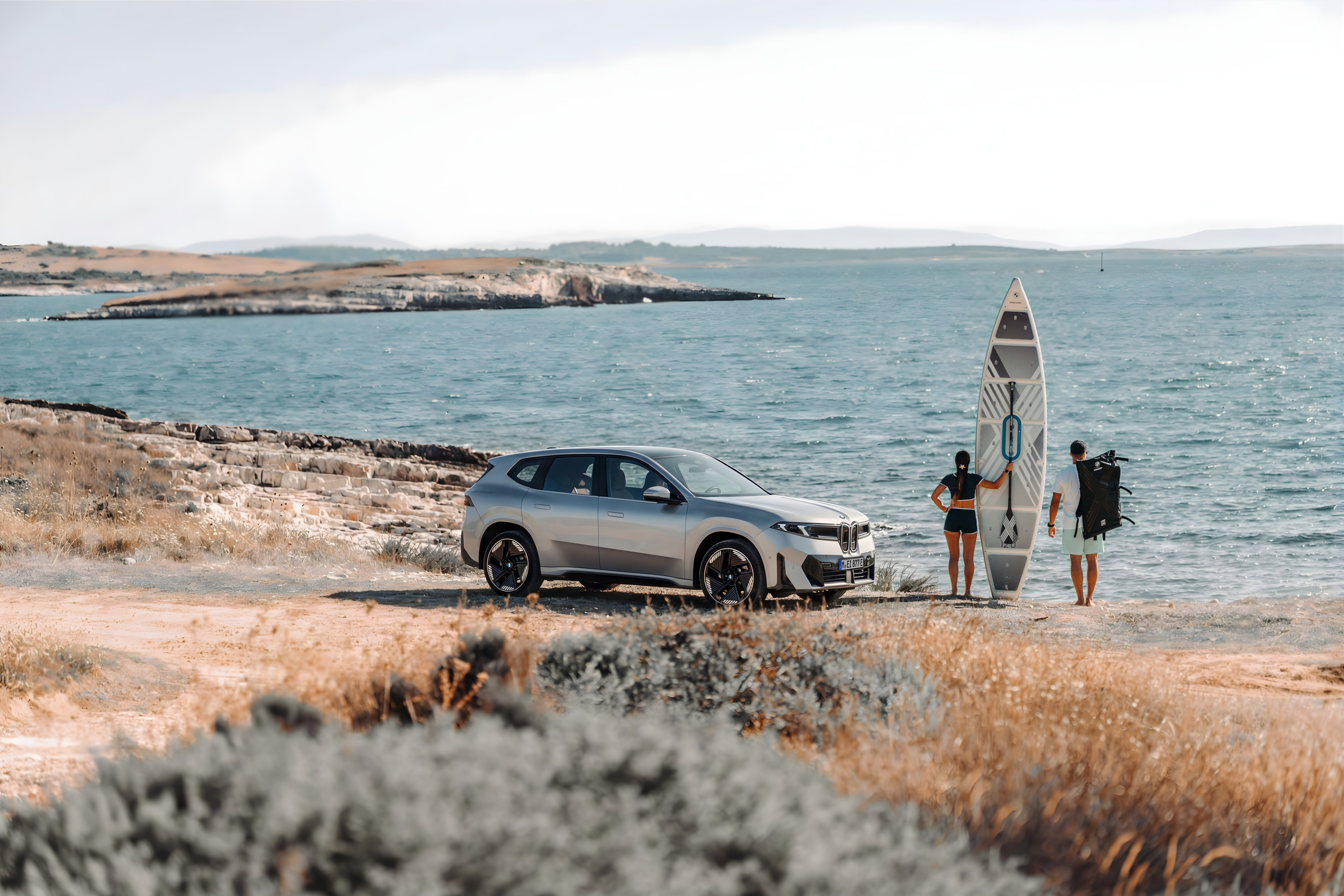
BMW says its charging network now covers 1.1 million charging points across Europe, alongside new app and navigation functions intended to make public charging costs and long-distance planning easier to follow. The company outlined the changes in a 21 July 2026 announcement focused on BMW and MINI electric vehicles.
A larger network, with regional differences
The headline figure is part of a wider network count. BMW reports 3.1 million charging points worldwide, an increase of about 300,000 compared with December 2025. Europe accounted for an additional 100,000 points over the same period, bringing the regional total to 1.1 million. Germany represented about 200,000 points, which BMW says was roughly 10 percent higher than in December.
Those figures describe the BMW Group Charging network rather than a single estate of company-owned hardware. BMW also refers to the IONITY joint venture and to a Preferred Partner Network within its European coverage. The company says 21 percent of its European charging points are currently part of that preferred group, where customers with the Active tariff can access selected providers at reduced rates. Partner availability and pricing vary by country, so the total should not be read as a guarantee that every location offers the same tariff or charging experience.
More visibility over charging costs
BMW’s other focus is cost information. The My BMW App and MINI App can show charging stations, charging capacities, tariffs and estimated costs. The apps also display tariffs saved in the customer’s Charging Wallet, as well as ad-hoc prices from local charging operators where that information is available. BMW says the same information can be viewed in the vehicle for supported models.
For Neue Klasse vehicles running BMW Operating System X, the company is adding live information during a charging session. The vehicle display and app can show the unit price per kilowatt-hour, the amount of energy added and the running total cost. BMW presents this as a way to make the price of a charging session easier to understand while it is taking place. The announcement does not claim that the feature applies to every BMW or MINI electric vehicle.
That distinction matters because public charging prices can depend on the charging provider, the customer’s tariff and the way a session is authenticated. BMW’s release says its apps can compare saved tariffs and, where available, local operator prices. It does not establish a single European pricing system, nor does it remove the market-by-market differences that affect what a driver ultimately pays.
Route planning is becoming more data-led
BMW and MINI are also expanding charging-aware route planning. When the vehicle’s current range is insufficient for a destination, BMW Maps and MINI Navigation can calculate a route with charging stops. The system can estimate stop duration and cost, allow a preferred minimum charge level and, where supported, prioritise selected charging providers. BMW says the planning can also be started from the vehicle app before departure.
The company says the system checks charging-point availability more frequently as a planned stop approaches and can identify an alternative if a selected location becomes unavailable. It also uses completed charging-session data stored in BMW’s backend to record the charging rates achieved at different points. Live outage data supplied by charging operators is included in route planning when available.
For a fast-charging stop included in active route guidance, BMW Maps or MINI Navigation can precondition the high-voltage battery during the journey. BMW says the process can also be started manually and that preconditioning is recommended to support charging performance, but it is not required to use a fast charger. This is an explanation of the announced software behaviour, not a guarantee of a particular charging time or result.
What the announcement does and does not show
The update addresses two practical barriers to wider electric-vehicle use: uncertainty about where to stop and uncertainty about the final cost. A larger roaming network can improve coverage, while better price and availability information can help drivers make more informed choices. But the figures remain BMW’s own network reporting, and the release does not provide an independent audit of every listed point, a uniform service level or a Europe-wide promise of identical functionality.
The announcement is therefore best understood as a technology and infrastructure update rather than a new charging standard. BMW is combining network access, tariff information, vehicle software and route planning into one customer-facing system. The usefulness of that approach will depend on local operator data, compatible vehicles, software versions and the accuracy of information supplied by individual charging sites.
For the European EV market, the broader signal is that charging competition is moving beyond the number of plugs installed. Access, price clarity and reliable route data are becoming part of the ownership experience. BMW’s latest figures show the scale it is targeting; the remaining question is how consistently drivers in different countries will experience the same level of information and availability.