
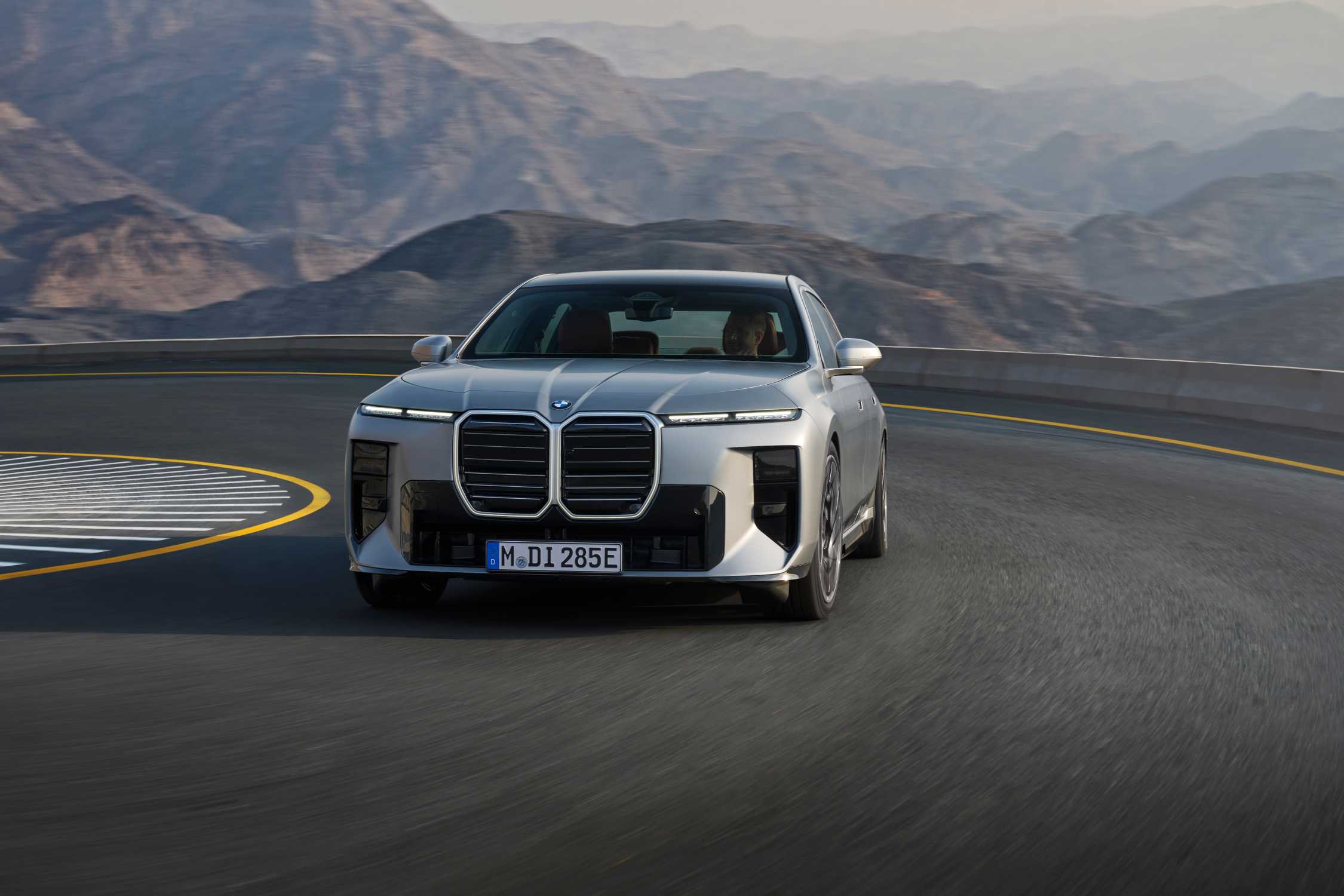
BMW’s latest official results point to a European electric-vehicle market that is moving faster than the group’s wider business. In its 30 July 2026 trading update, BMW reported sharply lower earnings and a small decline in global deliveries, while battery-electric vehicle (BEV) deliveries in Europe rose by more than a third in the second quarter. The announcement also included a workforce restructuring agreement as the company prepares for tougher competition.
A mixed first-half picture
The BMW Group delivered 1,156,727 BMW, MINI and Rolls-Royce vehicles in the first six months of 2026, down 4.2 percent from the same period a year earlier. Regional performance was uneven: first-half deliveries grew 5.4 percent in Europe and 3.9 percent in the United States, but fell 20.4 percent in China. The second quarter made that contrast more pronounced, with Europe up 7.6 percent and the United States up 11.9 percent, while China declined 30.2 percent.
Profitability weakened at the same time. Second-quarter earnings before tax were €1,697 million, down 35.1 percent year on year, and the group’s pre-tax margin was 5.4 percent. For the first half, earnings before tax fell 29.4 percent to €4,045 million, with a 6.5 percent margin. BMW said its automotive segment was affected by lower sales volumes, competition, currency and commodity pressures, higher depreciation and the impact of import duties.
Those figures matter because they put the electric-car gains in context. BMW is reporting real progress in one part of the portfolio, but it is doing so while the broader automotive business is under financial and geopolitical pressure.
Europe is carrying the BEV momentum
BMW delivered 116,807 fully electric vehicles worldwide in the second quarter, up 5.2 percent from the same quarter of 2025. Europe was the clear bright spot: 81,500 of those vehicles were delivered in the region, an increase of 37.9 percent. Fully electric vehicles represented 31.3 percent of BMW Group deliveries in Europe during the quarter, compared with 24.4 percent a year earlier.
The company attributes part of that momentum to the Neue Klasse, its next-generation electric vehicle programme. BMW said the BMW iX3, the first Neue Klasse model, was on track to reach 100,000 orders since its sales launch. The BMW i3, the second model in the family, had also recorded strong demand after the opening of early orders. BMW’s 10 July sales announcement had already described a similar pattern: strong European BEV growth alongside weaker conditions in China and parts of Asia-Pacific.
These are company-reported deliveries and orders, not an independent market ranking or a test result. They show how BMW’s electric mix is developing inside its own sales base, but they do not by themselves establish that the brand is winning the wider European EV market.
Efficiency is becoming part of the EV story
BMW’s response is not limited to adding electric models. The group said it is accelerating efficiency measures, reducing complexity and implementing structural changes to establish a sustainably lower cost base. It has reached an agreement with its Works Council on an extensive workforce restructuring programme, including voluntary severance packages.
That decision illustrates the industrial challenge behind the transition to electric mobility. New battery-electric architectures require investment in software, batteries, production systems and supplier networks, while automakers still have to protect margins in a market with uneven demand. BMW’s results suggest that higher BEV volumes in Europe are arriving alongside a need to make the business leaner.
BMW also confirmed its guidance for 2026. It expects automotive deliveries to decline slightly from the previous year and its automotive EBIT margin to remain within a range of 1 to 3 percent. The company expects group earnings before tax to decline significantly. Those forecasts are BMW’s outlook, not a guarantee, and the company noted that political and macroeconomic conditions could change the outcome.
What the announcement tells us
The most useful reading of BMW’s update is therefore two-sided. First, the Neue Klasse is gaining visible traction in Europe, where the group’s fully electric deliveries grew substantially in the second quarter and made up nearly one in three deliveries. Second, that progress is not insulating BMW from weaker profits, a sharp downturn in China or the cost of reorganising its industrial base.
For the electric-mobility sector, the announcement is a reminder that adoption and profitability are moving on related but different tracks. A growing BEV share can coexist with lower total deliveries, thinner margins and difficult decisions about jobs and production. BMW’s next results will show whether the European momentum can continue as the Neue Klasse expands, and whether the efficiency measures can offset the wider pressures the company has identified.