
What BMW is counting
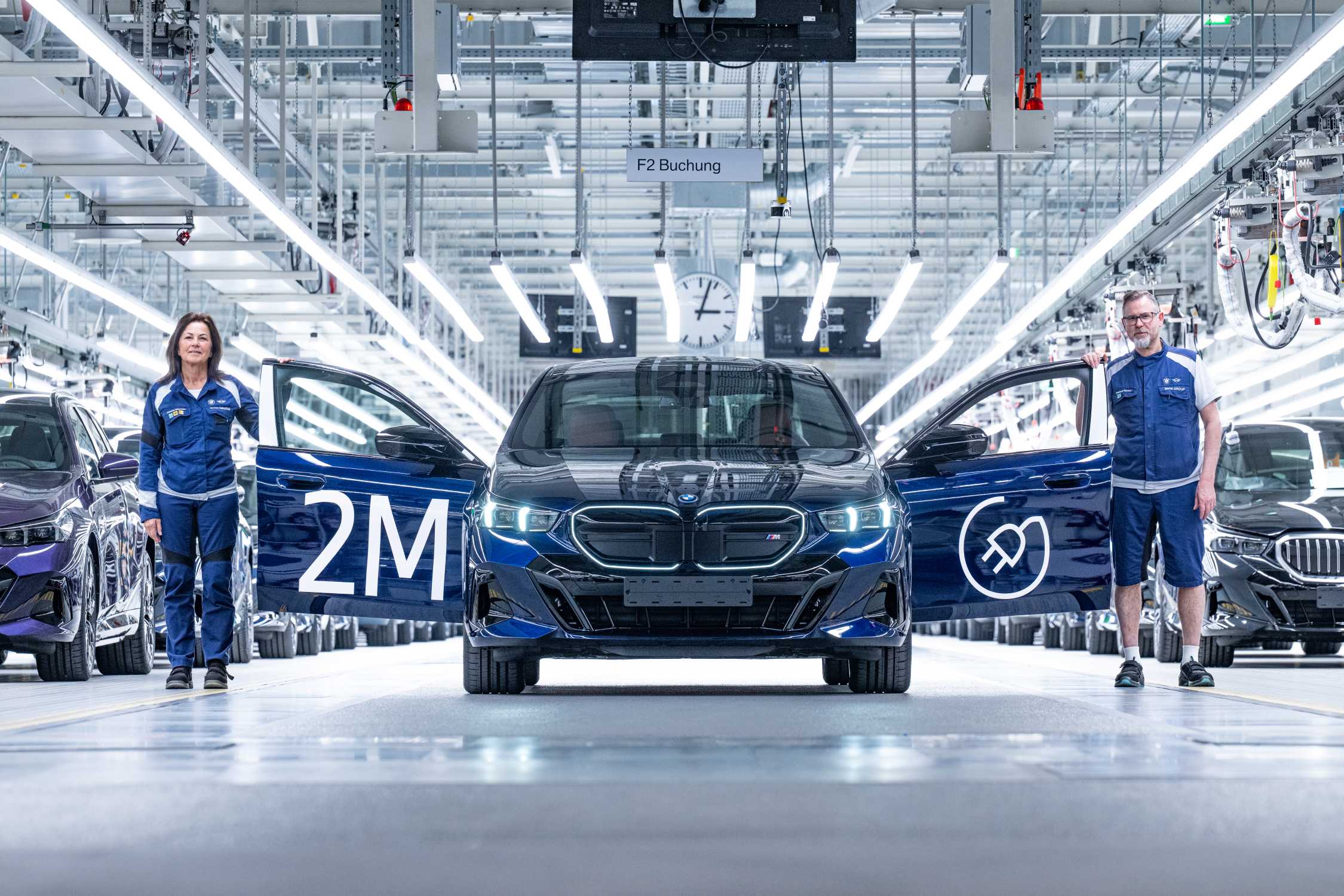
BMW Group says it has produced its two-millionth all-electric vehicle: a BMW i5 M60 xDrive sedan assembled at Plant Dingolfing in Tansanit Blue. The anniversary car is intended for a customer in Spain. That distinction matters. This is a production milestone, not a claim that two million battery-electric BMW Group vehicles were registered in a particular market or sold during a single period. It is also specifically about all-electric vehicles, rather than the wider category of electrified cars that can include plug-in hybrids.
The company set out the milestone in an official announcement that also describes how its plants are being used. Dingolfing began series production of all-electric cars with the BMW iX in 2021. It now builds the iX, i5 sedan and Touring, and i7. BMW says more than 320,000 all-electric vehicles have been built at the Lower Bavarian site since that start, meaning almost one in six of the group’s two million BEVs came from Dingolfing.
Why the factory model matters
The more consequential detail is not the colour of the anniversary car or the badge on its boot. It is the production model behind it. BMW says its iFACTORY approach keeps different powertrains on a flexible mixed-build line. In practical terms, a plant can assemble vehicles with different drive systems within the same industrial environment instead of being locked into a single powertrain layout.
That is an operational choice, not a prediction about which technology will win. BMW describes it as a technology-open strategy. For the company, the stated benefit is the ability to adjust the production mix as demand changes while continuing to use an established site and its workforce. For readers tracking the EV transition, it provides a useful lens: a manufacturer can increase BEV output without presenting every factory conversion as an all-or-nothing switch.
What the milestone says — and what it does not
BMW reports that more than a quarter of the vehicles produced at Dingolfing were all-electric in 2025. It also says at least one all-electric model has been rolling off the line at every German BMW Group plant for several years. Those are company-reported production facts, not an independent audit of the wider German market. The announcement does not provide a model-by-model global sales table, a regional breakdown of the two million vehicles, or a like-for-like emissions analysis.
That framing keeps the headline in proportion. Two million vehicles is a substantial manufacturing marker, but it does not by itself show how quickly individual markets are adopting battery-electric cars. Nor does it establish how many of the group’s factories are dedicated exclusively to BEV production. The release instead points to a network where electrification is being added alongside other drive systems, with Dingolfing serving as its broadest all-electric model site.
Where Dingolfing fits in the wider rollout
Dingolfing’s role is significant because it is not a single-model outpost. BMW identifies it as the group plant with the widest all-electric model range, covering the iX, i5 sedan and Touring, and i7. That breadth makes the site a useful indicator of how an established automaker is distributing BEV production across vehicle lines rather than treating electric mobility as a niche programme.
The milestone also arrives as BMW continues to describe electrification as a group-wide production process. Its own account links the two-million figure to the gradual spread of all-electric assembly across German plants, while preserving mixed production lines. This combination suggests a measured industrial strategy: add electric capacity, keep options open, and use the existing network where possible. It is less dramatic than announcing a factory that will build only EVs, but it may be easier to scale across a complex manufacturing footprint.
The reporting takeaway
The verified news here is straightforward: BMW Group has announced the production of its two-millionth all-electric vehicle, and the milestone vehicle came from Dingolfing. The supporting detail shows where the count was made, which models that plant builds, and how BMW says it is managing the transition. The announcement is therefore best read as evidence of production progress and industrial method, not as a buying recommendation or a guarantee of future availability.
For the next check on this story, the useful questions are equally concrete: whether BMW’s all-electric share at Dingolfing continues to rise, whether more models join the site’s production mix, and how the company’s flexible lines perform as demand varies by market. Those questions remain open. What is established is the milestone and the manufacturing context BMW has disclosed in its primary source.