
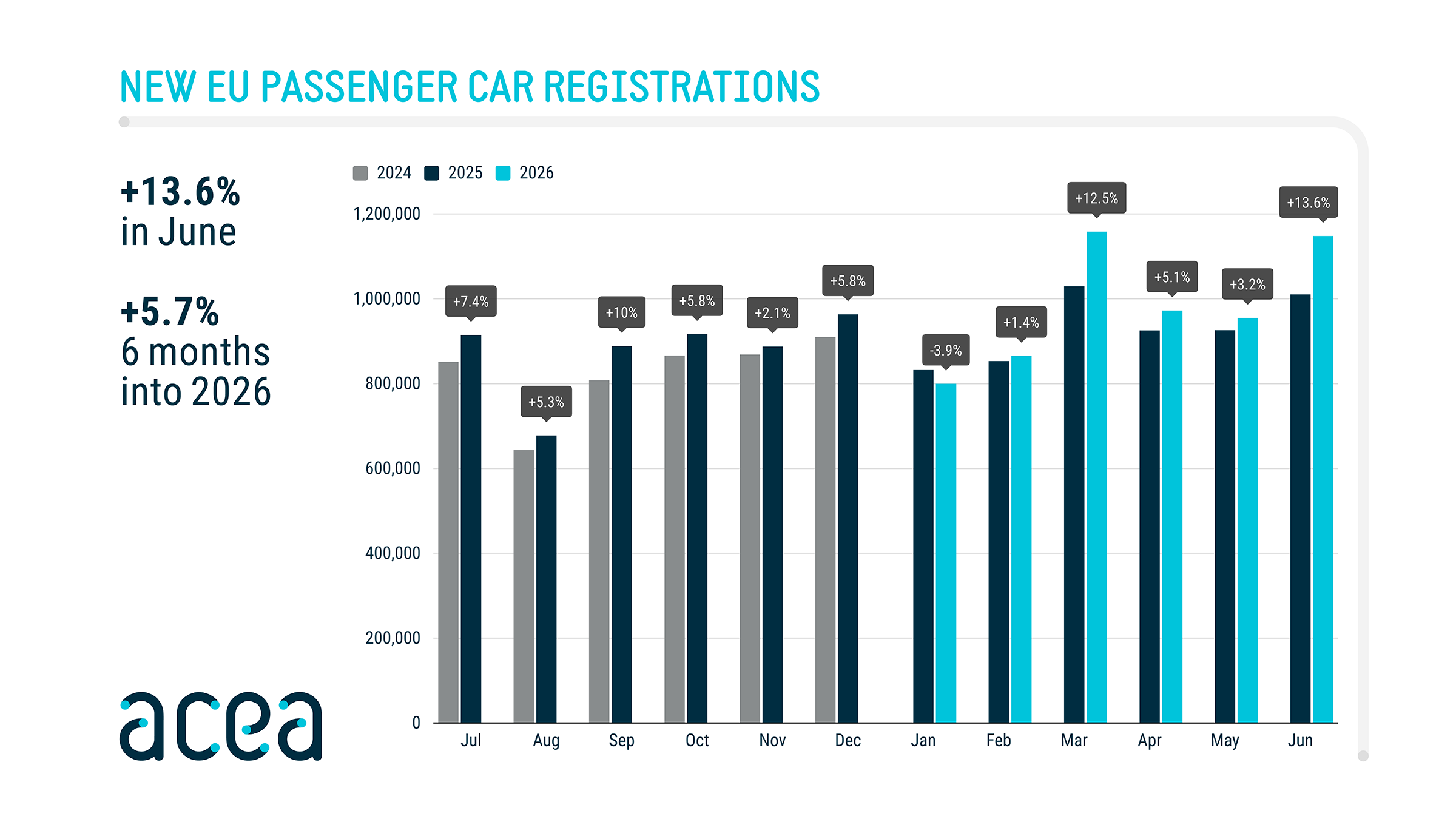
Battery-electric cars accounted for 20.7% of new-car registrations in the European Union during the first half of 2026, according to ACEA’s latest registration release. The industry association recorded 1,220,890 new battery-electric cars through June, while total EU registrations increased 5.7% year to date.
Electric cars move further into the mainstream
The battery-electric share rose from 15.6% in the first half of 2025 to 20.7% in the same period of 2026. That change puts fully electric cars ahead of petrol and diesel combined in the EU’s new-car mix, although the comparison reflects registrations rather than the entire vehicle fleet already on the road.
ACEA’s figures show that the shift is occurring alongside strong demand for several electrified powertrains. Hybrid-electric cars remained the largest category, taking 37.3% of registrations, while plug-in hybrids reached 9.8%. Together, battery-electric cars, hybrids and plug-in hybrids represented the clear majority of new EU registrations during the period covered by the release.
Growth was concentrated in several major markets
France, Germany and Denmark recorded particularly strong growth in battery-electric registrations. ACEA reports increases of 62.9% in France, 48% in Germany and 41.2% in Denmark compared with the first half of 2025. Belgium also posted growth, although at a more moderate 8.2%.
These markets matter to the overall result because three of the four largest EU markets together represented 63% of all battery-electric registrations. The figures therefore show both a broadening of electric-car adoption and a continued concentration of volume in a small group of major markets.
Combustion powertrains continued to lose share
The same dataset shows the combined share of petrol and diesel cars falling to 29.7%, compared with 37.8% a year earlier. Petrol cars represented 22.2% of new registrations, down from 28.4% in the first half of 2025. Diesel cars accounted for 7.5%, compared with 9.4% a year earlier.
ACEA recorded 1,309,153 new petrol cars during the first six months, while diesel registrations continued their longer-term decline. The association’s figures do not identify the individual causes behind each buyer’s choice, but they do document a changing balance between combustion, hybrid and battery-electric powertrains in the new-car market.
What the release says about the transition
ACEA attributes the market’s robust demand for electrified technologies primarily to market support measures. That wording is important: the release reports registrations and describes the market context, but it does not present a forecast for the rest of the year or claim that the same growth rate will continue unchanged.
The data also does not mean that one in five cars on European roads is electric. It applies to new EU passenger-car registrations during the first half of 2026. The existing fleet includes vehicles registered in earlier years, and its powertrain mix will change more slowly as cars are replaced.
For the electric-mobility industry, however, the registration share is a meaningful indicator of current demand. A 20.7% share gives battery-electric vehicles a substantially larger position in the market than they held one year earlier. It also places charging access, electricity costs and vehicle availability closer to the centre of mainstream automotive planning, even though ACEA’s release does not quantify those factors individually.
A clearer picture than a single sales headline
The first-half result is best read as a market snapshot rather than a verdict on a particular manufacturer or model. Battery-electric cars gained share, hybrids remained the most popular electrified option, plug-in hybrids expanded their position and petrol and diesel continued to decline. The result is a mixed transition, with several technologies competing for buyers at the same time.
ACEA’s official figures provide a verified baseline for following that transition through the remainder of 2026: 1.22 million battery-electric registrations, a 20.7% EU share and a 5.7% increase in total new-car registrations through June. The next monthly releases will show whether the first-half pattern represents a durable change in European demand or a temporary response to market conditions and support measures.