
Kia has published a five-year electrification roadmap that puts a wider electric-vehicle range at the centre of its growth plan, while keeping hybrid and combustion models in the mix. The company says it wants to reach one million annual EV sales by 2030 and build a 14-model electric line-up across passenger cars, SUVs and purpose-built vehicles.
The targets come from Kia's official 2026 CEO Investor Day announcement. That distinction matters: this is a corporate plan, not a promise that every model, target or charging service will arrive in every market on the same timetable. It is nevertheless a useful snapshot of how one major automaker is positioning its electric business as the market moves beyond early-adopter products.
A broader EV portfolio, led by smaller vehicles
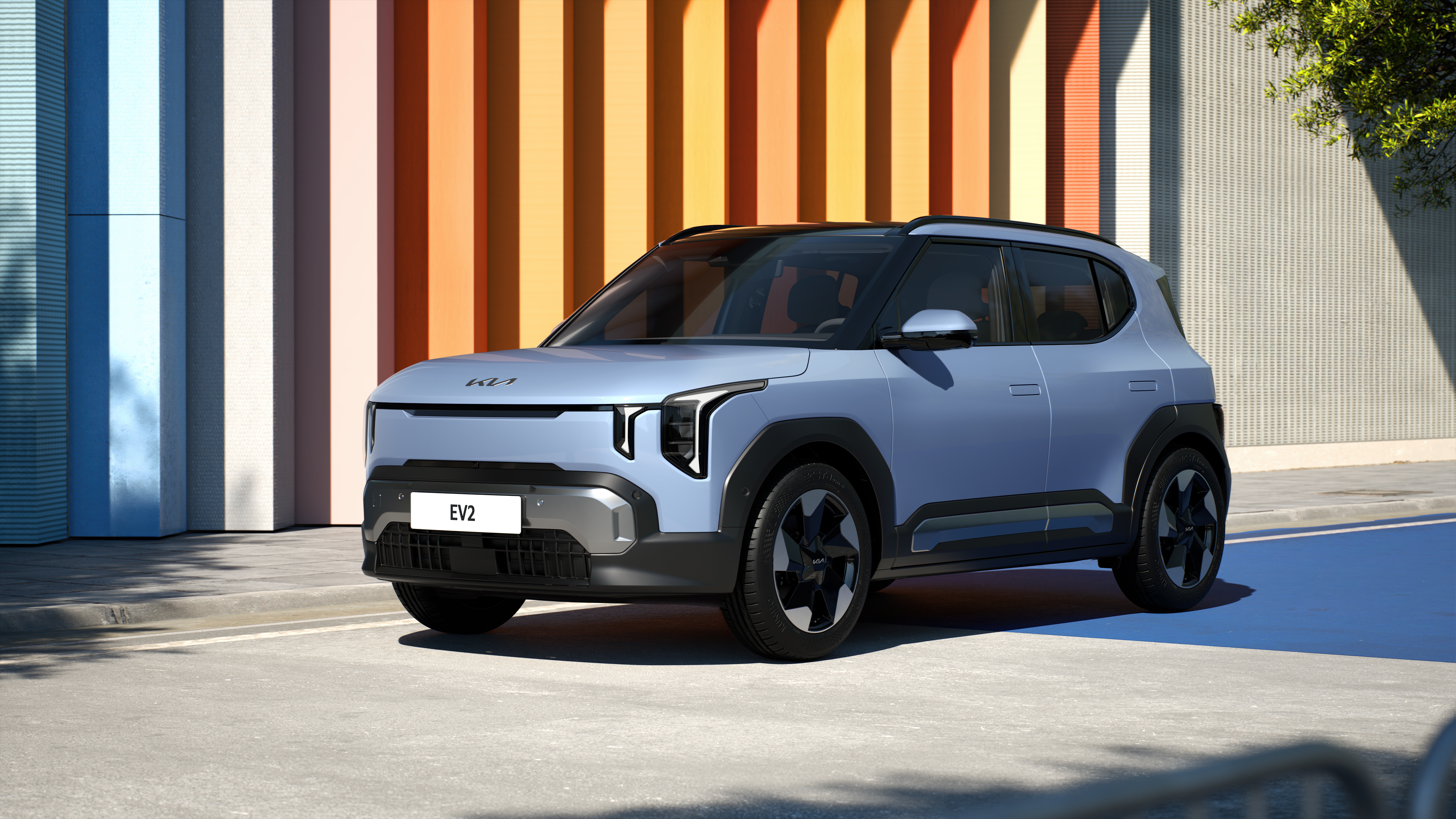
Kia's plan calls for 14 EV models by 2030: two passenger vehicles, nine SUVs and three PBV models. The company says the expansion is intended to cover more of the volume segments that shape mainstream adoption, rather than concentrating only on premium or large vehicles. The roadmap begins with the EV2 and the Syros EV, then extends through the EV3, EV4 and EV5 families, a future C-segment SUV, a B-segment hatchback and Kia's electric light-commercial range.
The EV2 is the clearest example of that entry-point strategy. In its earlier official unveiling, Kia described the compact B-SUV as an electric model designed around urban use and everyday practicality. The car's presence in the new roadmap does not by itself confirm a single global specification or launch schedule; it shows how Kia is using smaller, dedicated EVs to broaden the addressable market.
Kia's headline objective is one million EV sales a year in 2030, equivalent to a 3.8 percent share of the global EV market in the company's plan. In Europe, the company is targeting EVs at 66 percent of its total sales by the same year. Those figures are ambitions set by Kia, not independently audited forecasts, and they will depend on production capacity, local incentives, charging access and customer demand.
What Kia says will change underneath
The roadmap also points to a next-generation EV platform intended to improve both capability and cost competitiveness. Kia says the platform is being developed with up to 40 percent more battery capacity, a 9 percent improvement in motor output and fifth-generation batteries with up to 15 percent higher energy density. These are planned engineering targets presented by the manufacturer; the announcement does not provide an independent test protocol or a production-vehicle result against which to verify them.
That qualification is important for readers comparing future EV claims. Battery capacity, energy density and motor output are separate measures, and none of them alone establishes real-world range, charging time or efficiency. Kia has not attached a single consumer specification to the entire future 14-model portfolio. More detailed figures will have to be assessed model by model when the vehicles and their regional versions are formally announced.
Charging is part of the access strategy
Kia says it will work with charging partners including Electrify America, IONNA and IONITY, while continuing to expand Hyundai Motor Group's E-pit network in Korea. Its announcement cites approximately 240,000 chargers in North America, one million in Europe and 480,000 in Korea, counting both fast and slower chargers. Those totals describe the charging access Kia says it has secured or can reach through its wider ecosystem; they should not be read as a guarantee that every charger is compatible with every Kia vehicle or available to every driver without separate network conditions.
The company also highlights digital tools such as the Kia One App and Plug & Charge 2.0. In the context of the roadmap, those services are intended to reduce friction around finding and paying for charging. The announcement does not turn them into a universal standard, and it does not replace the practical questions that remain market-specific: connector availability, roaming agreements, installation rules and the reliability of a particular site.
EV growth alongside hybrids
Kia's strategy is deliberately broader than a battery-electric push. The company plans to expand its hybrid range to 13 models by 2030, alongside nine new combustion-engine models, and it includes hybrid, plug-in hybrid and extended-range options in its wider xHEV planning. Kia says this mix reflects different speeds of electrification across regions and customer groups.
That multi-powertrain approach is the central context for the EV target. Kia is trying to increase electric volume without betting its entire global plan on a single transition speed. It is also linking the vehicle roadmap to manufacturing changes, localised supply and a five-year investment plan of KRW 49 trillion, of which KRW 21 trillion is allocated to future businesses including electrification, autonomous driving and robotics.
What the announcement confirms
Kia has given investors and the public a clear direction: more EVs, more small and medium-sized choices, stronger charging access and a stated target of one million annual EV sales by 2030. It has not, in this announcement, provided a complete country-by-country launch calendar, final prices or independent evidence that the projected platform improvements have been achieved in production.
For electric-mobility watchers, the significance is therefore strategic rather than transactional. The next useful checkpoints will be formal vehicle announcements, regional production decisions, confirmed specifications and evidence of how the charging partnerships work in practice. Until then, Kia's 2026 roadmap is best read as a verified account of the company's intended direction—and as a set of targets that still have to be delivered.