
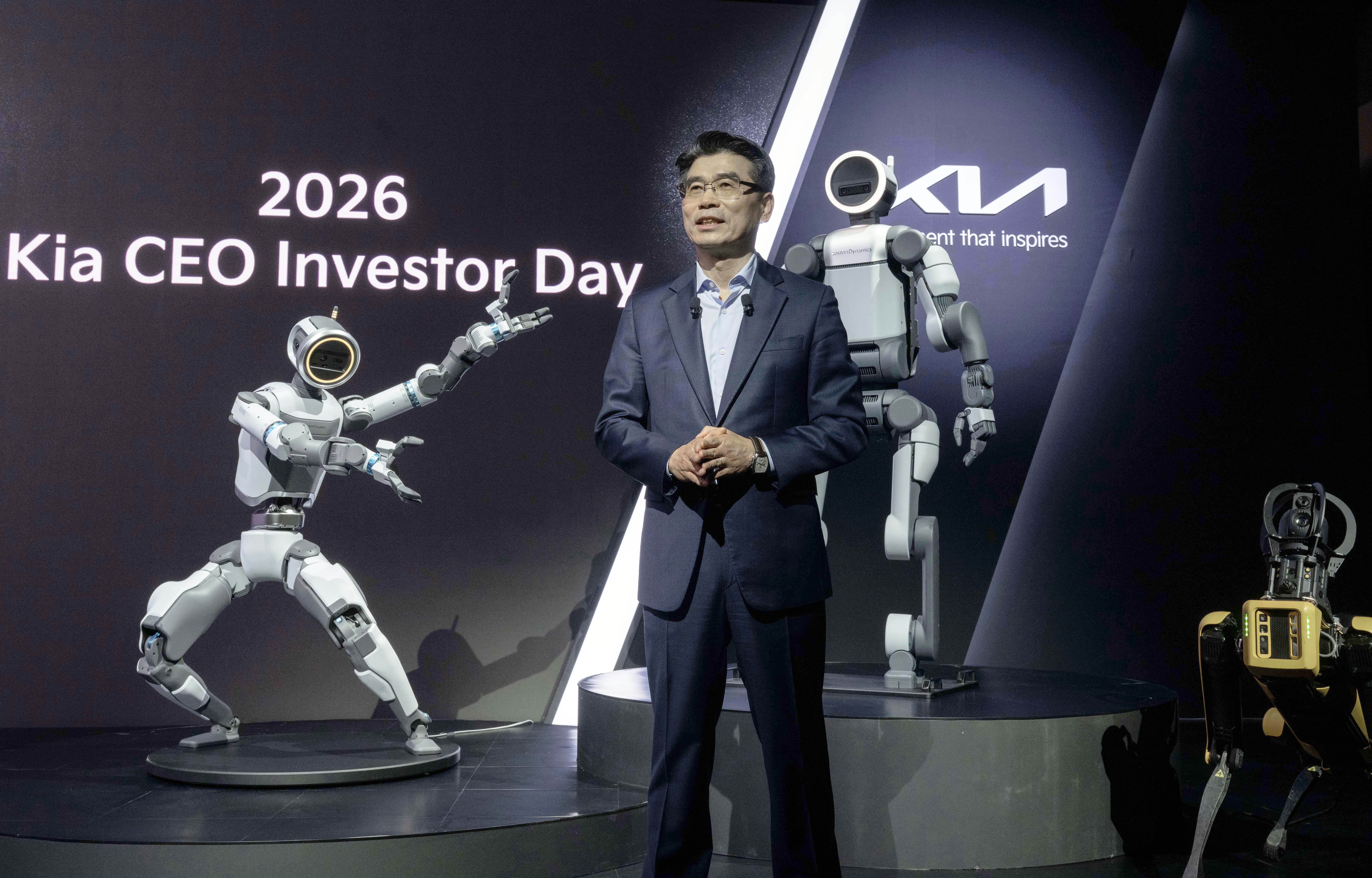
Kia has set a target of selling 1 million electric vehicles a year by 2030, as part of a wider plan to expand its electrified lineup and invest in future mobility businesses. The target was presented at the company’s 2026 CEO Investor Day in Seoul and is a stated corporate objective, not a reported sales result.
According to Kia’s official announcement, the company is targeting global annual sales of 4.13 million vehicles in 2030, with EVs accounting for 1 million units. Kia says that would represent a 3.8% share of the global EV market. Its 2026 plan targets total sales of 3.35 million vehicles, including 400,000 battery-electric vehicles.
A larger EV range across several vehicle segments
Kia plans to expand its EV portfolio from 11 models in 2026 to 14 models by 2030. The planned mix includes two passenger cars, nine SUVs and three platform-based commercial vehicles. The company says the approach is intended to cover higher-volume segments rather than concentrate only on premium or performance vehicles.
Kia identifies the EV2 as an entry point for its mass-market EV expansion in 2026. It also refers to a future C-segment SUV EV and a broader platform-based vehicle range. The announcement does not provide a complete model-by-model launch schedule or confirm availability in every market, so the 2030 lineup remains a forward-looking plan rather than a finalized global product calendar.
The company is also developing a next-generation EV platform. Kia says the platform is intended to improve product performance and cost competitiveness, with planned technical improvements including up to a 40% increase in battery capacity. The announcement does not attach a single range figure or charging time to the platform, meaning those details should not be treated as confirmed specifications for individual future vehicles.
Charging access is part of the plan
Kia’s strategy treats charging access as a condition for wider EV adoption. The company says it will work with global charging partners and strengthen infrastructure in Korea, the United States and Europe. In Korea, Kia specifically points to the Hyundai Motor Group’s E-pit network. The announcement does not identify a single global charging partner or give a final count of additional chargers, so the infrastructure commitment is best understood as a strategic direction rather than a completed network expansion.
The investment plan is substantial. Kia says it intends to invest KRW 49 trillion between 2026 and 2030, with KRW 21 trillion allocated to future businesses. The company groups EVs with hybrid vehicles, software-defined vehicles, autonomous driving and robotics in its broader growth strategy. That combination matters because Kia is not presenting electrification as an isolated product programme; it is linking vehicle sales, charging, software and manufacturing investment.
EV growth alongside hybrids and commercial vehicles
Kia’s roadmap is not an all-battery strategy. It also plans to expand its hybrid range to 13 models and targets annual hybrid sales of 1.1 million units by 2030. The company says this mixed powertrain approach reflects differences in customer demand and the pace of electrification across regions.
That positioning gives the announcement two distinct messages. Kia is committing to a large increase in battery-electric sales and a wider EV portfolio, but it is also preserving hybrids as a major part of its volume plan. The result is a transition strategy designed to scale EVs while maintaining multiple powertrain options in markets where charging infrastructure, policy and consumer demand are developing at different speeds.
The credibility of the 2030 target will depend on execution over the next four years: whether Kia can bring lower-cost EVs to higher-volume segments, expand charging access and build the production capacity required for a 1 million-unit annual goal. For now, the official announcement establishes the target, the investment envelope and the product structure. It does not yet demonstrate that the target has been achieved or guarantee how each market will develop.
Kia’s 2026 CEO Investor Day therefore marks a significant strategic commitment, but it should be read as a roadmap rather than a forecast of guaranteed outcomes. The company has supplied clear numbers for its EV ambition and investment plans; the next test will be whether those targets translate into deliveries, infrastructure and sustainable profitability.