
Mercedes-Benz is presenting the new electric C-Class as more than a battery-powered replacement for a combustion model. In a recent media release, the company said its independently verified 360° Environmental Check records a two-thirds reduction in the car’s carbon footprint across its full life cycle compared with the current combustion-powered C-Class.
The assessment covers the vehicle from material sourcing and manufacturing through its use phase. That broader view matters because the environmental case for an electric vehicle is not determined by tailpipe emissions alone. Mercedes-Benz says the new C-Class was designed from the outset as a battery-electric vehicle, allowing resource efficiency, material selection and recyclability to be considered during development rather than added later.
A lifecycle result backed by an audited assessment
The two-thirds reduction is a manufacturer-reported result, but Mercedes-Benz says the underlying 360° Environmental Check has been verified by independent auditors. The company also reports an approximately 23 per cent reduction in supply-chain carbon emissions, supported by lower-carbon aluminium, steel, plastics and battery cells.
That distinction is important for readers comparing electric vehicles. The announcement is not a road test and does not establish the same result for every owner or market. Actual lifecycle emissions depend on factors including production inputs, electricity sources, mileage and vehicle configuration. What Mercedes-Benz has published is a product-specific assessment with a defined comparison against the current combustion C-Class.
Recycled and lower-carbon materials move upstream
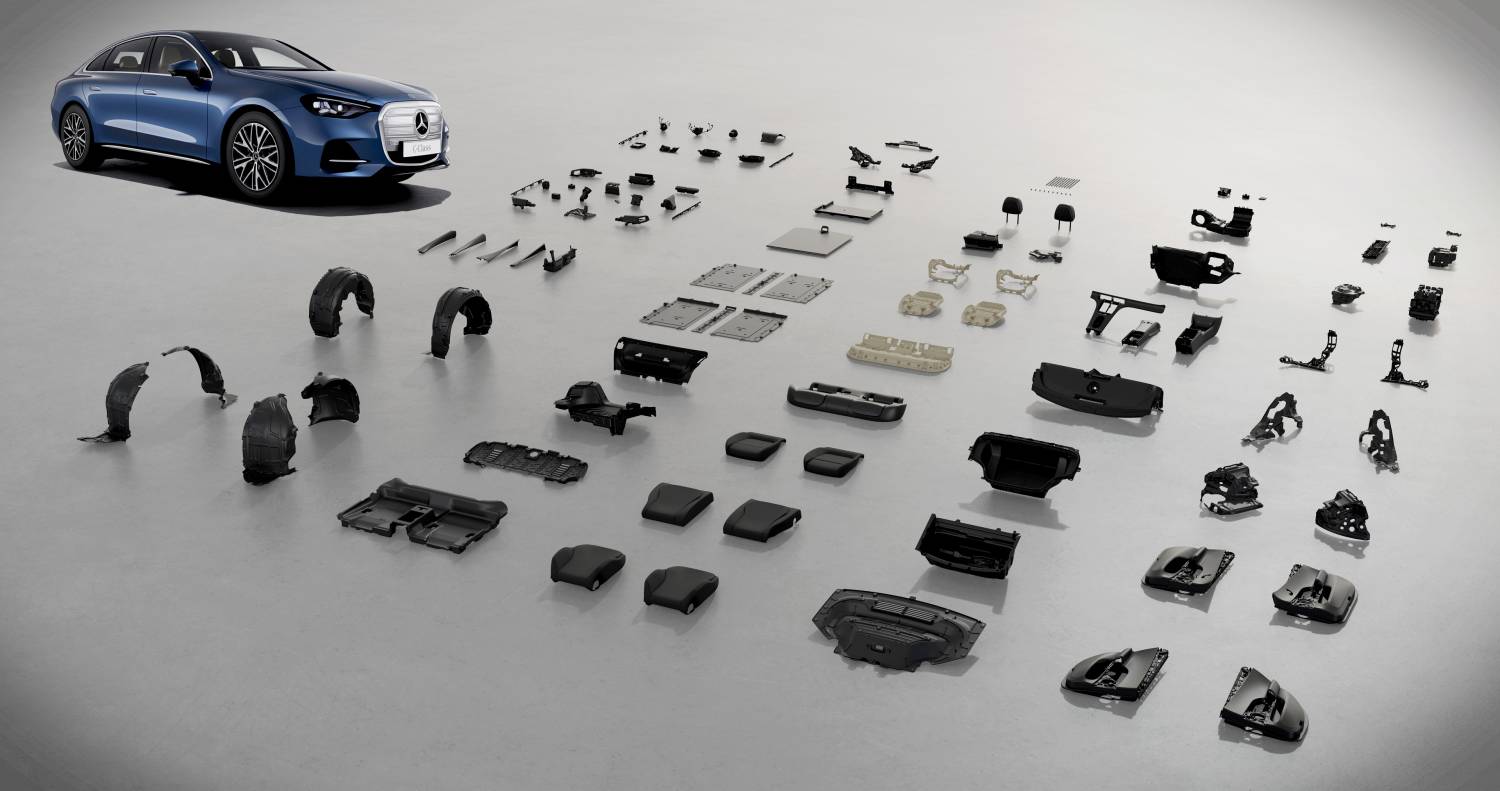
Mercedes-Benz says approximately two-thirds of the electric C-Class’s aluminium requirement comes from electrolysis plants powered by renewable energy or from material with a higher recycled share. The approach applies to visible and structural areas including the body, steering knuckles, wheels and battery housing.
The company also identifies around 45 kilograms of steel from electric-arc furnaces powered by renewable energy for components manufactured in-house. In thermoplastics, the share of secondary materials is more than four times higher than in the C-Class currently in series production. Around 49 kilograms of recycled thermoplastic are used across the vehicle.
The published examples show how those claims translate into individual parts. The frunk tub contains 50 per cent post-consumer recyclate, wheel-arch liners contain 93 per cent recycled content, and jack mounts use 100 per cent recycled bumpers from end-of-life vehicles. Mercedes-Benz also reports 83 per cent recycled content in bumper carriers, while nonwoven fabric and seat-cover yarn contain recycled shares of 34 and 50 per cent respectively.
Efficiency is part of the environmental calculation
The electric C-Class is also presented as an efficiency project. Mercedes-Benz lists a WLTP range of more than 762 kilometres for the initial version and combined energy consumption of 18.5–14.1 kWh per 100 kilometres. The car uses an 800-volt electrical architecture, and the company says up to 325 kilometres of WLTP range can be recharged in ten minutes under the stated test conditions.
A standard multi-source heat pump uses waste heat from the electric drive system and battery, together with ambient air, to warm the cabin. Mercedes-Benz says it requires around one-third of the electrical energy of a comparable electric auxiliary heater for the same heating output under the same conditions. The new One-Box braking system is designed to use recuperation for up to 99 per cent of braking processes, with recuperation output of up to 300 kW.
These figures are useful context rather than a promise of identical real-world results. Mercedes-Benz notes that the stated consumption, emissions and range values depend on driving style and other non-technical factors, while the charging figure is tied to specific conditions and a prescribed measurement procedure.
Production and charging complete the picture
The electric C-Class is produced at Mercedes-Benz’s Kecskemét plant in Hungary. The site combines a ground-mounted solar park with photovoltaic systems on the roofs of the battery assembly, body shop and assembly halls. Mercedes-Benz says the combined installation has a total capacity of 42.3 MWp and can cover around 25 per cent of the plant’s annual energy demand.
The company also reports that optimised processes in the new paint shop reduce energy consumption by around 20 per cent compared with the existing facility and cut carbon emissions by approximately 80 per cent. On the customer side, the car is integrated with MB.CHARGE Public, which Mercedes-Benz says currently includes more than three million charging points worldwide. Its Renewable Charging service uses renewable-energy certificates where a charging site is not yet supplied directly with renewable electricity.
The announcement’s significance is therefore less about one headline range figure than about the number of production and supply-chain decisions included in the assessment. Mercedes-Benz is making a case that an electric car’s environmental performance has to be improved across materials, manufacturing, energy use and charging. The independently verified assessment provides a documented basis for that claim, while leaving buyers to consider how their own electricity mix, driving pattern and ownership period will affect the result.