
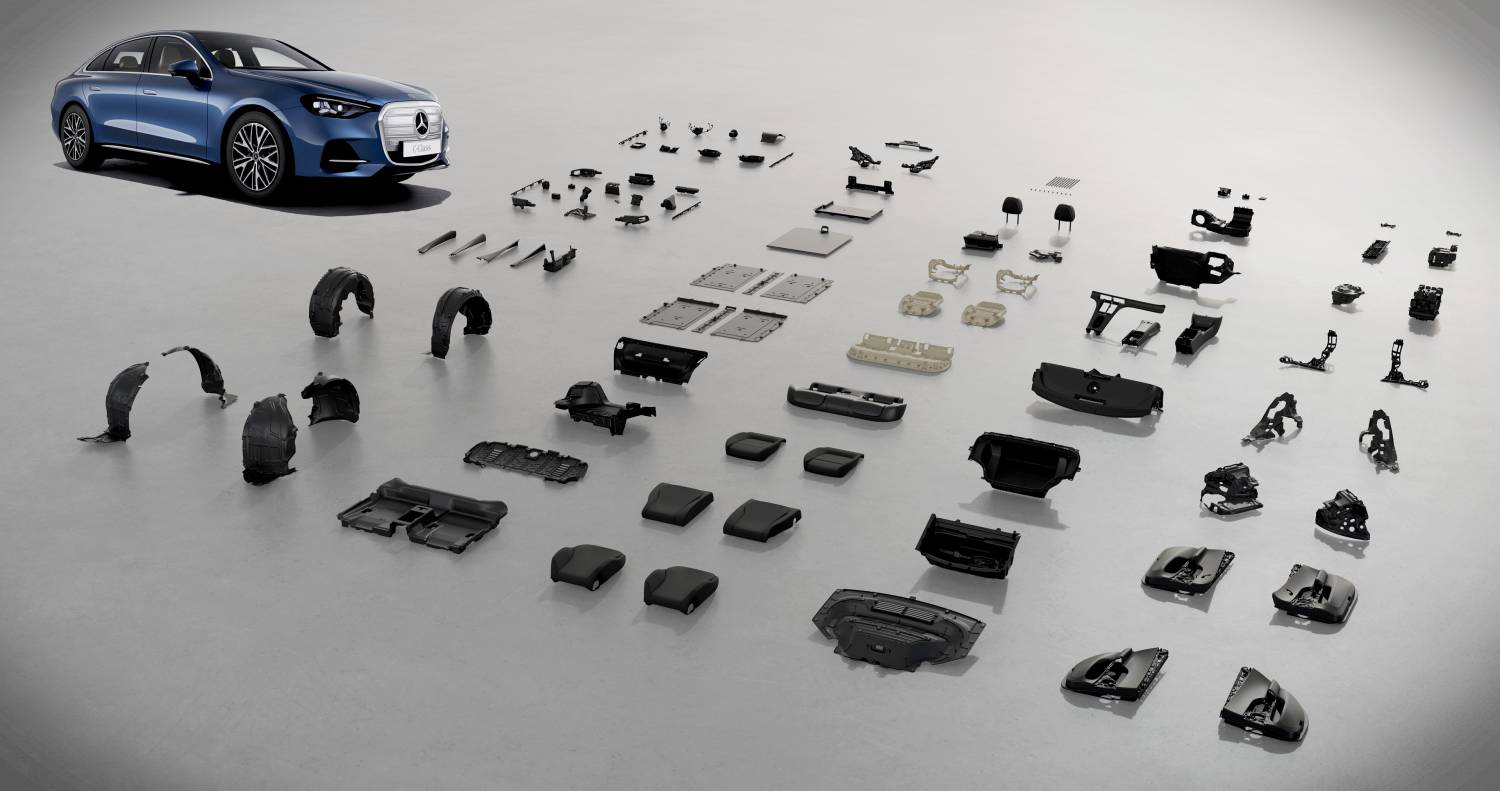
Mercedes-Benz has published the results of a 360° Environmental Check for its new all-electric C-Class, putting a quantified lifecycle claim at the centre of its latest electrification announcement. The company says the battery-electric saloon achieves a two-thirds reduction in carbon footprint across its lifecycle compared with the current combustion-powered C-Class. Mercedes-Benz says the assessment has been verified by independent auditors.
The announcement, dated July 28 in Stuttgart, is relevant to electric-mobility reporting because it covers more than the vehicle’s tailpipe emissions. The assessment looks across materials, manufacturing, the use phase and the supply chain. That wider frame matters: an electric car’s environmental profile depends on how its battery and body are made, the energy used in production and driving, and what happens to materials throughout the vehicle’s life.
Mercedes-Benz describes the electric C-Class as a battery-electric model designed from scratch, rather than a combustion car converted to electric drive. It says the work on the vehicle followed a “Design for Environment” approach, with material efficiency, recyclability and secondary raw materials considered during development. The company’s figures and methodology are set out in its official Environmental Check announcement.
Materials become a measurable part of the claim
The company says approximately two-thirds of the electric C-Class’s aluminium requirement comes from electrolysis plants powered by renewable energy or from material with a higher share of recycled content. It also reports that around 45 kilograms of steel used in the vehicle’s in-house-manufactured steel components comes from electric-arc furnaces powered by renewable energy.
Recycled plastics are another part of the disclosure. Mercedes-Benz reports that the vehicle uses about 49 kilograms of recycled thermoplastic material in total. The examples it gives include a frunk tub containing 50 per cent post-consumer recyclate, wheel-arch liners with 93 per cent recycled content and jack mounts made from 100 per cent recycled bumpers from end-of-life vehicles. The company also says the share of secondary material in thermoplastics has increased by more than four times compared with the C-Class currently in series production.
These are material inputs, not a promise that every component is recycled or that the car has no manufacturing footprint. Mercedes-Benz’s headline result is a comparative lifecycle figure, and its baseline is the current combustion-powered C-Class. That distinction is important when reading the announcement: the result describes the company’s assessment of two powertrains and their value chains, rather than an independently conducted ranking of all electric cars.
Efficiency and charging are part of the use phase
For the period when the car is driven, Mercedes-Benz reports an energy-consumption range of 18.5 to 14.1 kWh per 100 kilometres and a WLTP range of more than 762 kilometres on one charge. The company says its 800-volt architecture supports rapid charging, with up to 325 kilometres of WLTP range recharged in 10 minutes under the conditions specified in the cited measurement procedure.
The announcement also highlights a standard multi-source heat pump. Mercedes-Benz says it uses waste heat from the electric drive system and battery, together with ambient air, and requires around one-third of the electrical energy of a comparable electric auxiliary heater to deliver the same heating output under the same boundary conditions. The new One-Box braking system is said to carry out up to 99 per cent of braking processes entirely through recuperation, with recuperation output of up to 300 kW.
Those figures are manufacturer-reported WLTP and engineering claims, not figures independently reproduced by Mobility Current. Actual energy use and charging performance can vary with temperature, speed, traffic, battery state, charging infrastructure and driving style. The company’s announcement itself notes that WLTP values depend on non-technical factors as well as the efficient use of the energy source.
Production and supply-chain measures
Mercedes-Benz says the electric C-Class is produced at its Kecskemét plant in Hungary, where a ground-mounted solar park and rooftop systems together provide 42.3 MWp of installed photovoltaic capacity. The company says that output can cover around 25 per cent of the site’s annual energy requirement. It also reports that optimised paint-shop processes reduce energy consumption by around 20 per cent compared with the existing facility and cut carbon emissions by approximately 80 per cent.
Across the supply chain, Mercedes-Benz says its reduced-carbon materials programme lowers emissions by approximately 23 per cent. It links that figure to work on aluminium, steel, plastics and battery cells, alongside supplier requirements covering human rights, environmental protection, working conditions and business ethics. The company says it aims to complete assessments of all material high-risk raw materials by 2028, with mitigation measures where necessary.
The announcement includes a further materials claim for the cabin: an optional vegan interior package for the electric C-Class is certified by The Vegan Society. Mercedes-Benz says the package covers items including seat upholstery, headliner, door and pillar trim, and carpets. This is a certification claim about the specified interior package, not a statement that every vehicle configuration or every material in the car is animal-free.
What the disclosure establishes
The immediate news is that Mercedes-Benz has released a product-specific lifecycle assessment and says independent auditors verified it. The disclosure gives readers a more detailed view of how the company is trying to reduce the footprint of a new electric model, from low-carbon inputs and recycled plastics to renewable-powered production and use-phase efficiency.
It does not, by itself, establish how the electric C-Class compares with every rival, nor does it replace real-world consumption data collected across different climates and charging networks. It is best read as a documented manufacturer assessment with a stated comparison point. For readers tracking the transition to electric mobility, that makes the announcement useful evidence about the measures Mercedes-Benz says it is implementing—and a reminder to keep lifecycle comparisons tied to their declared assumptions.