
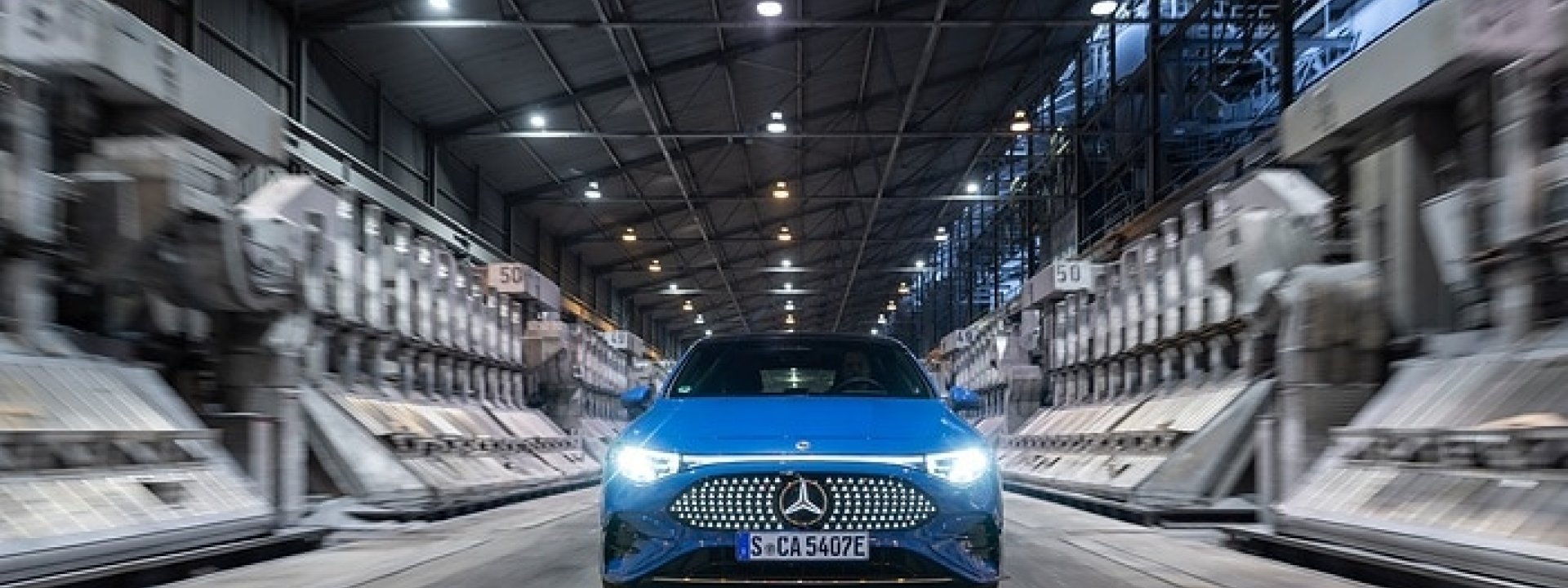
Mercedes-Benz is preparing to introduce a higher recycled-content aluminium alloy into the production of its next generation of large electric vehicles. The automaker says the move is part of an expanded partnership with Norwegian aluminium producer Hydro, focused on reducing emissions and strengthening regional supply chains.
According to Mercedes-Benz's announcement, the first step will be the integration of Hydro CIRCAL recycled aluminium into series production for future large EVs. The material contains at least 75% post-consumer scrap, compared with around 25% in the aluminium currently supplied to Mercedes-Benz, the company says.
What the announcement covers
The announcement concerns materials and manufacturing rather than a new vehicle launch. Mercedes-Benz has not identified the first model that will use the recycled aluminium, nor has it provided a production start date, vehicle price or market availability details. The stated plan is therefore a supply-chain commitment for future electric vehicles, not a specification announcement for a vehicle customers can order today.
Hydro CIRCAL is made from aluminium recovered from end-of-life vehicles, buildings and infrastructure. The recovered metal is processed and returned to automotive applications. Mercedes-Benz and Hydro present this as a way to keep aluminium in circulation while reducing demand for newly extracted raw material.
Hydro's recycled aluminium is one part of a broader materials strategy. The partners are also continuing to work on low-carbon primary aluminium, including additional volumes of Hydro REDUXA. That material is produced using renewable electricity and is already sourced by Mercedes-Benz for selected aluminium components used in series production.
A supply-chain decision with electric-vehicle implications
Aluminium is used across modern vehicles, including structural and body components. For an electric vehicle programme, a lower-carbon material route can reduce manufacturing emissions without changing the vehicle's charging system, battery chemistry or driving characteristics. The announcement does not claim a specific reduction in the footprint of an individual EV; instead, it sets out how Mercedes-Benz and Hydro intend to reduce the carbon intensity of aluminium at industrial scale.
The companies also link the partnership to supply-chain resilience. Producing, collecting and remaking aluminium closer to vehicle production can shorten transport routes and reduce dependence on distant sources of raw material. Mercedes-Benz says Hydro's recycled and low-carbon products are supported by batch-by-batch supply-chain transparency, while the two companies continue to examine further opportunities for emissions reduction.
That combination of recycled content and lower-carbon primary production is important because recycled aluminium alone cannot meet every manufacturing requirement. New vehicles still need consistent grades, certified performance and reliable volumes. The companies say the CIRCAL material can meet stringent requirements for performance, quality and safety, but the release does not provide independent test data or a vehicle-level lifecycle assessment for the future EVs.
What remains to be confirmed
The announcement leaves several practical questions open. Mercedes-Benz has not said which factories will receive the material, which components will use it first, or how quickly the new aluminium will expand across the range. It also does not disclose the expected carbon footprint of the finished vehicles or the proportion of recycled aluminium that each vehicle will contain.
Those details will determine the eventual significance of the commitment. A higher recycled-content input can support circular manufacturing, but its real-world effect depends on collection rates, processing energy, logistics and the volume of material used in production. For now, the verified development is the agreement to introduce Hydro CIRCAL into the next generation of large Mercedes-Benz electric vehicles, alongside continued work on lower-carbon primary aluminium.
The announcement adds a manufacturing and materials layer to Mercedes-Benz's electric-mobility strategy. It does not change how drivers charge or operate an EV, and it should not be read as a promise of immediate consumer availability. Its significance is upstream: the companies are attempting to reduce the emissions and raw-material burden associated with building future electric vehicles while keeping the material within established automotive production standards.