
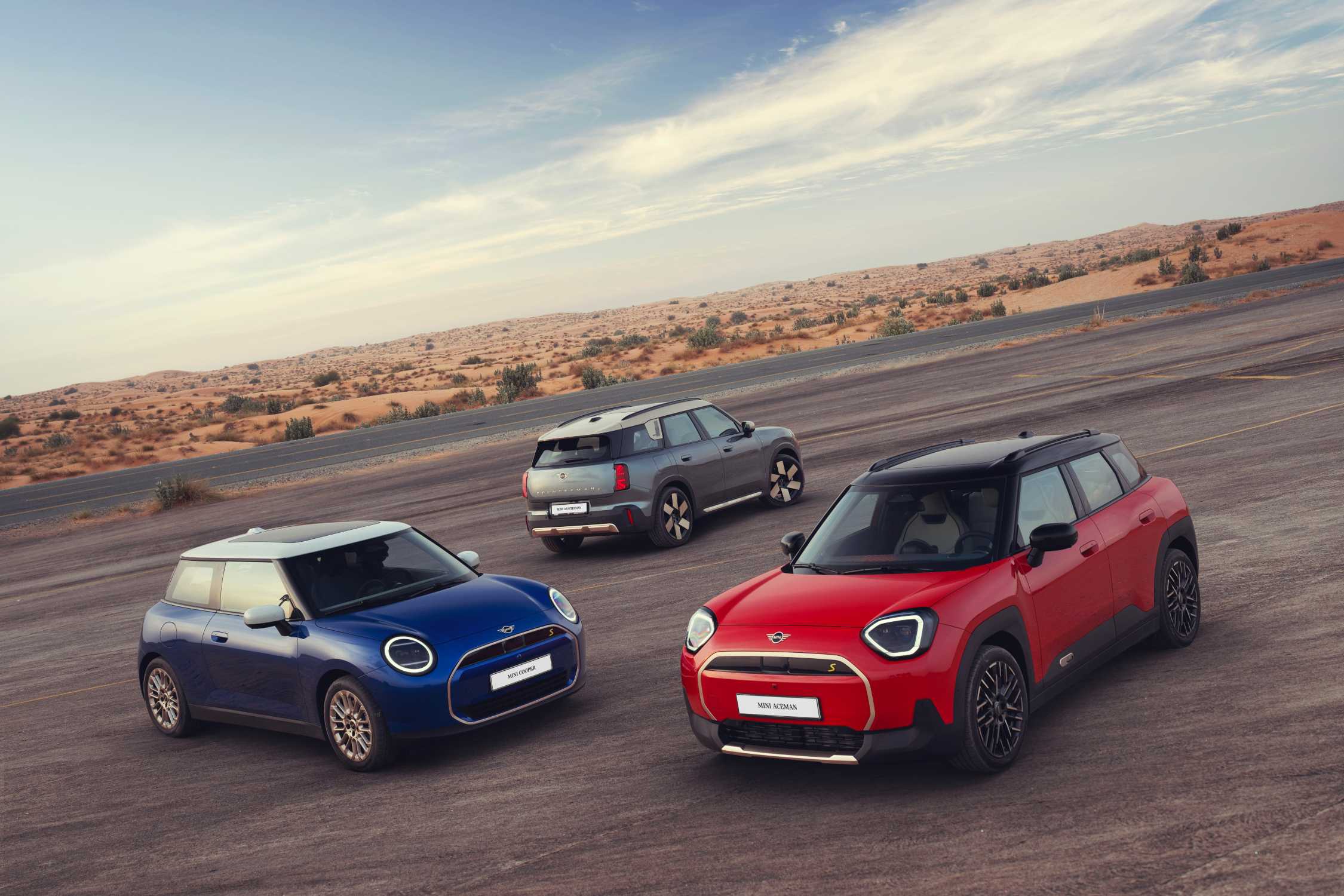
MINI has announced two 2026 market milestones for its electric-mobility strategy: the brand has entered Pakistan with a fully electric model family and has returned to Jordan with its latest generation. The announcement, published by BMW Group's global PressClub, frames both moves as part of MINI's wider expansion into emerging markets. It confirms the corporate decision and the partner network involved; it does not provide pricing, sales targets or a timetable for a wider regional rollout.
In Pakistan, MINI says it arrived earlier this year in partnership with Dewan Motors, BMW Group's long-standing importer. The company describes the launch as a market entry for its latest generation of fully electric models. That wording matters: the release is reporting a portfolio introduction and a local commercial presence, rather than announcing a new vehicle or a new battery technology. It also gives no information about the number of vehicles delivered, the share of electric sales expected in Pakistan or the size of the charging network supporting customers.
The announcement identifies three vehicles in the Pakistani line-up. The all-electric MINI Cooper is presented as the compact core of the range. The MINI Aceman brings the brand's electric offering into the premium small crossover segment, with a more versatile cabin concept. The MINI Countryman Electric is described as the largest model in the line-up, with increased range capability, more interior space and available all-wheel drive. These are descriptions supplied by MINI; the release does not publish market-specific range figures, prices, delivery schedules or charging times for Pakistan.
The market entry was accompanied by a new BMW and MINI showroom in Karachi. MINI says the site follows BMW Group's Retail.Next concept, combining digital touchpoints with personal interaction. That detail provides a concrete indicator of how the announcement is being put into practice locally: the expansion involves retail infrastructure and an importer relationship, not only a product listing. The source does not say whether additional Pakistani locations are planned, so a broader nationwide rollout cannot be assumed from this announcement alone.
Jordan is the second part of the update. MINI says it returned to the country on 12 August 2026 in partnership with Abu Khader Automotive, the BMW Group's official importer there since 2010. The statement notes that MINI first opened a showroom in Amman in 2012 before leaving the market. The return therefore combines a renewed distribution relationship with the brand's latest model generation. Unlike the Pakistan section, the Jordan announcement describes a market relaunch but does not say that every model offered there will be fully electric.
Abu Khader Automotive is expected to provide sales and aftersales support tailored to the Jordanian market, according to MINI. The release positions that support as a way to reconnect with existing enthusiasts and reach new customers. It does not disclose local prices, finance terms, delivery volumes, charging partnerships or the exact powertrains and trim levels to be offered in Jordan. Those omissions are important for readers: a brand's return announcement confirms intent and commercial structure, but it is not a substitute for a market-specific specification or availability notice.
Taken together, the two milestones show MINI pursuing geographic expansion alongside electrification. Pakistan is the clearer electric-mobility signal because MINI explicitly describes the market entry as fully electric and names the Cooper, Aceman and Countryman Electric. Jordan is evidence of renewed regional coverage, with electrification present in the brand's wider model strategy but not fully itemised in this announcement. The distinction keeps the reporting tied to what the source actually confirms.
The timing also gives the update relevance beyond a single retail opening. Electric-vehicle adoption is not determined only by vehicle technology; it also depends on importers, retail capacity, aftersales coverage and local customer access. MINI's announcement points to those commercial building blocks in two different ways: a new Karachi showroom for a fully electric portfolio, and a returning importer in Jordan for the latest generation. It offers no independent evidence about demand, infrastructure performance or customer experience, so those questions remain open.
MINI describes both developments as part of a future-focused urban-mobility strategy. That is the manufacturer's framing, not an independent assessment of market impact. The verified facts are narrower and more useful: a fully electric MINI family has been introduced in Pakistan through Dewan Motors; the brand has returned to Jordan through Abu Khader Automotive; and the announcement was made on 12 August 2026. Readers seeking the primary record can consult the official BMW Group announcement.
For now, the news is best understood as a market-access update rather than a promise of immediate regional scale. MINI has confirmed where it is building a presence and which partner relationships underpin it, while leaving prices, volumes, charging arrangements and detailed availability to future local communications. That boundary matters: it lets the announcement stand as evidence of MINI's expansion into two markets without turning a corporate release into unsupported advice or a prediction about electric-vehicle adoption.