
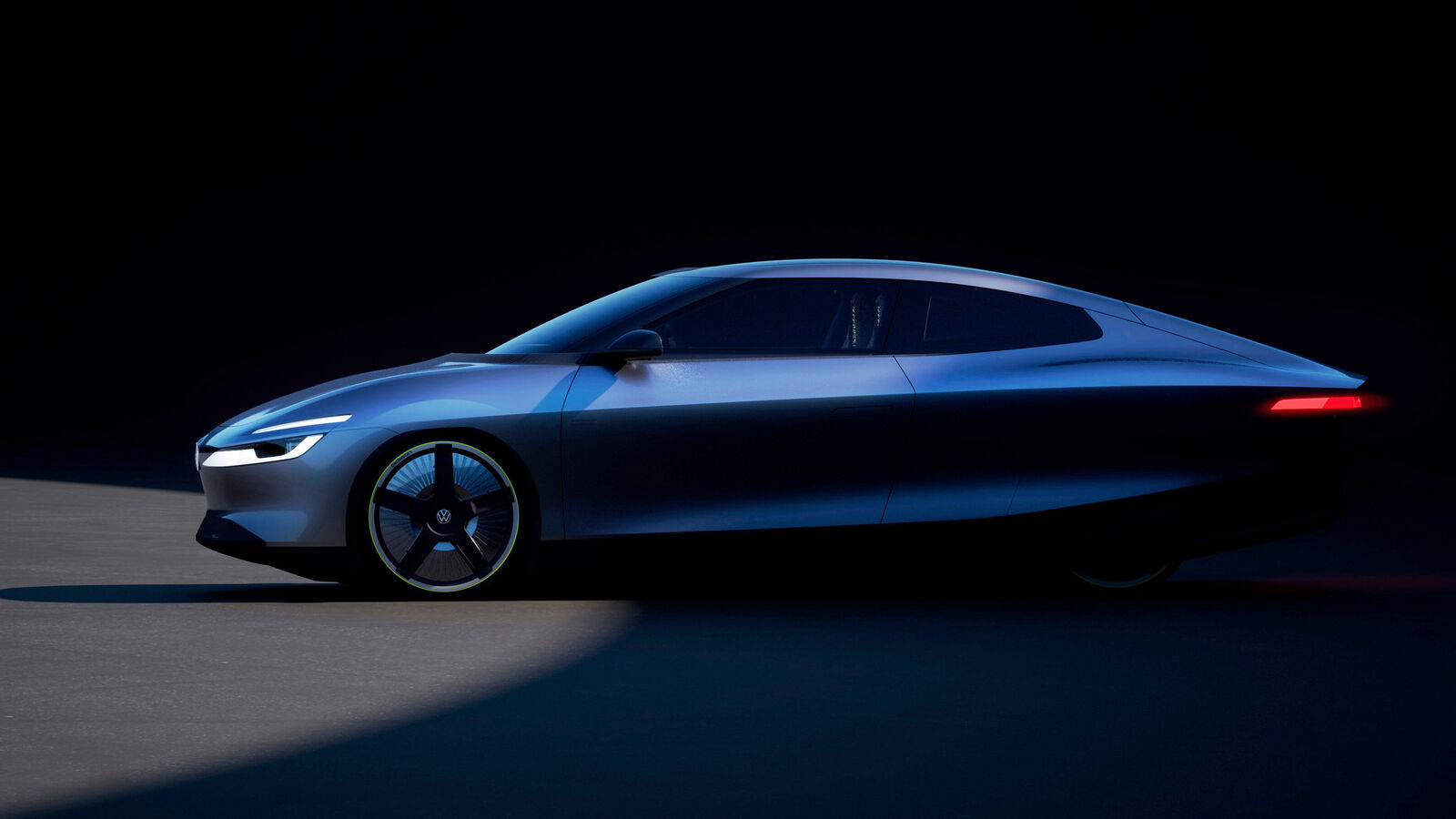
On September 14, 2026, Volkswagen presented the Mission Efficiency as a near-production electric car built around an efficiency demonstration. The company highlighted three world records and an officially documented long-distance run. Its headline aerodynamic figure is a drag coefficient (Cd) of 0.158, which Volkswagen describes as a new record for road-legal cars, according to the company’s announcement.
The consumption figure depends on tightly controlled conditions
Volkswagen announced consumption of 6.48 kWh/100 km during an idealised run at a constant 68 km/h. The test included no uphill sections, while auxiliary loads such as air conditioning were switched off. That result demonstrates the car’s efficiency under a specific set of conditions; it is not an everyday-driving figure that can be applied to every journey.
The separate documented journey covered 1,278.36 km. It began at Volkswagen’s development centre in Wolfsburg and ran through Poznań and Olomouc before reaching Vienna. Volkswagen reports consumption of 7.51 kWh/100 km when charging losses are included, and 6.89 kWh/100 km without those losses. The route was completed at an average speed of 67.72 km/h, with a maximum speed of 138 km/h.
One recharge and a 54.9 kWh battery supported the run
The Mission Efficiency uses a net 54.9 kWh battery and was recharged only once during the journey. Volkswagen says the car still displayed 164.0 km of remaining range when it arrived in Vienna. Those figures make the point of the demonstration fairly clear: the distance result depends on limiting energy demand across the vehicle, not simply on installing a larger battery.
The car is based on Volkswagen’s MEB+ technology and uses front-wheel drive, the same drive layout identified for the ID. Polo and ID. Cross. Its specified production-derived components include a 99 kW (135 hp) electric motor and the high-voltage battery. The body is 4,775 mm long and 1,392 mm high. Inside, the vehicle has four seats arranged in a 2+2 layout and 481 litres of boot space.
Solar power adds range only when conditions allow
A 370 W photovoltaic system integrated into the glass roof and tailgate supplies power to the vehicle’s electrical consumers. Volkswagen says the system can add up to 30 km of real-world range per day, depending on the season, region and weather. The upper-limit wording is important: solar assistance will vary with conditions and does not represent a fixed range guarantee.
Mission Efficiency therefore presents a tightly linked set of choices: very low aerodynamic drag, a relatively defined 54.9 kWh net battery and careful energy management. The announcement does not set a production timetable or define a retail specification. For now, the concrete result is narrower: Volkswagen has tied its efficiency claim to a documented route, but the reported consumption and range figures remain inseparable from the stated route, speeds and test conditions.