
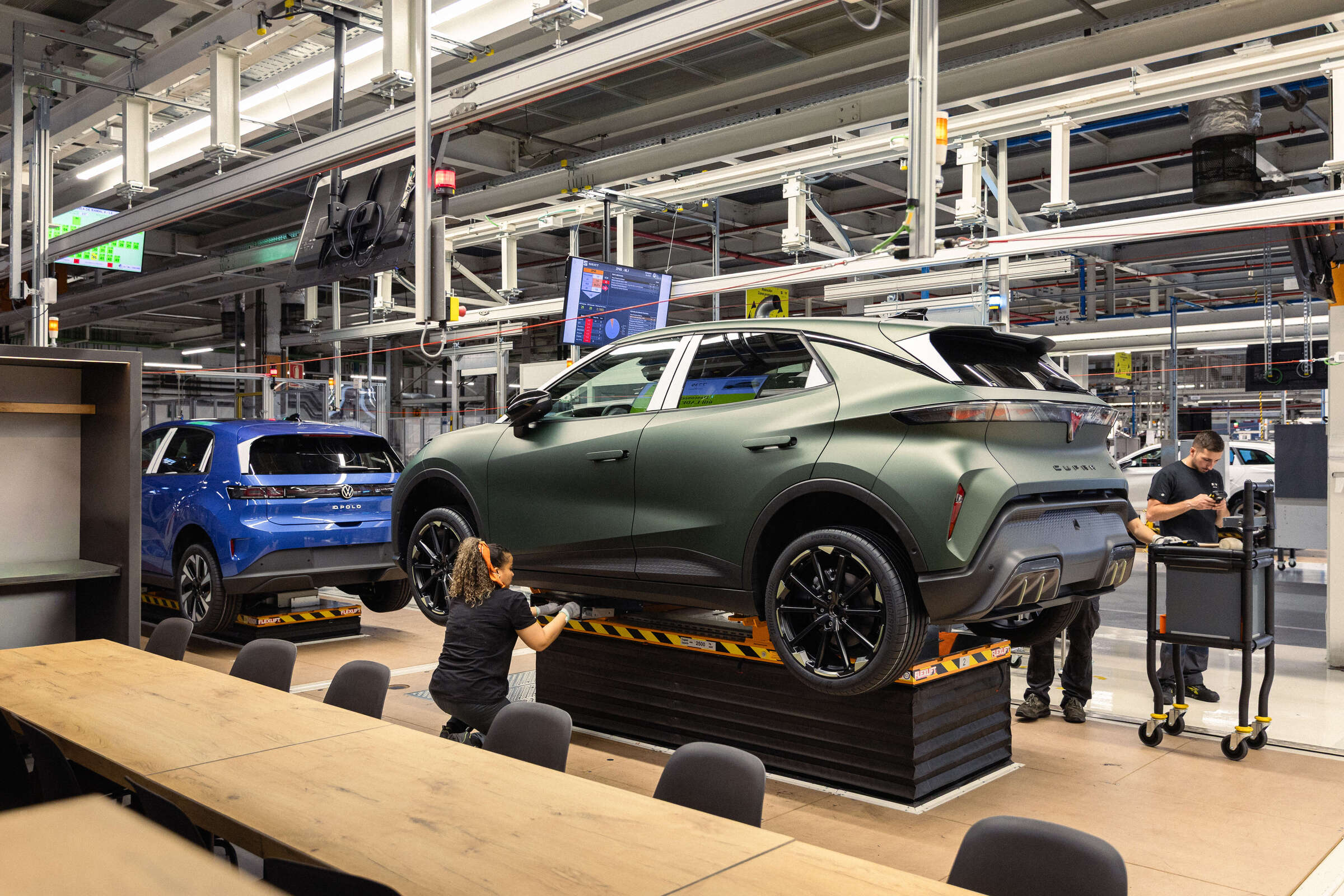
Volkswagen Group has started production of the fully electric CUPRA Raval and Volkswagen ID. Polo at the SEAT & CUPRA plant in Martorell, Spain. The announcement marks a concrete manufacturing step in the group’s plan to expand electric vehicles in Europe’s compact-car segment.
According to Volkswagen’s official newsroom announcement, the two models are the first vehicles from the Electric Urban Car Family to enter production at Martorell. The company describes the programme as four fully electric models from three brands, all produced in Spain. Production beginning is an industrial milestone; it is not evidence of customer deliveries, sales performance or independent vehicle testing.
Two electric models enter production
The Volkswagen ID. Polo is the all-electric successor to the brand’s long-running Polo line. Volkswagen says the model uses the latest development of its MEB+ electric-vehicle platform and is designed for compact urban use while retaining space for everyday driving. The company’s stated WLTP range is up to 454 kilometres, and the car includes vehicle-to-load functionality that can supply power to devices such as e-bikes.
The CUPRA Raval takes a different position within the same production programme. SEAT & CUPRA describes it as an approximately four-metre urban electric car with a sport-focused design and three editions planned. The announcement gives an estimated range of around 450 kilometres and says the model is expected to reach the market in summer 2026. Those figures and timing are manufacturer claims reported from the announcement, rather than results from an independent test.
Martorell becomes a European EV production hub
The significance of the announcement extends beyond the two nameplates. SEAT & CUPRA is leading the Electric Urban Car Family project for Volkswagen Group’s Brand Group Core. The programme uses a shared platform and common production approach across several brands, which the company says reduces complexity and costs while allowing each model to retain a distinct design and market position.
Volkswagen says the transformation of Martorell involved more than €3 billion in investment. The company also links the plant’s role to a wider €10 billion electrification effort in Spain involving SEAT & CUPRA, Volkswagen Group, PowerCo and other partners. The stated objective is to make Spain a stronger base for electric-vehicle development and manufacturing, rather than relying only on imported compact EVs for European customers.
That localisation matters because smaller electric cars are central to the next phase of European adoption. Larger EVs have often arrived first, but compact models can address a broader range of urban and family use cases. Starting production in Spain gives Volkswagen Group a manufacturing base for this segment while keeping the Raval and ID. Polo connected to an existing European industrial network.
What the announcement confirms
The confirmed development is the start of vehicle production at Martorell. The release does not provide a production-volume target, a detailed delivery schedule for every European market, or independent confirmation of the stated range figures. It also does not establish how quickly the new models will build market share. Those questions will require later reporting based on registration data, customer deliveries and verified operational results.
For now, the announcement shows Volkswagen Group moving from product planning into factory execution for two compact battery-electric vehicles. It also demonstrates how the group is using shared engineering and Spanish production to spread electric technology across different brands. Whether that approach delivers meaningful scale will depend on ramp-up performance, pricing, charging access and customer demand—factors not settled by the production start alone.