
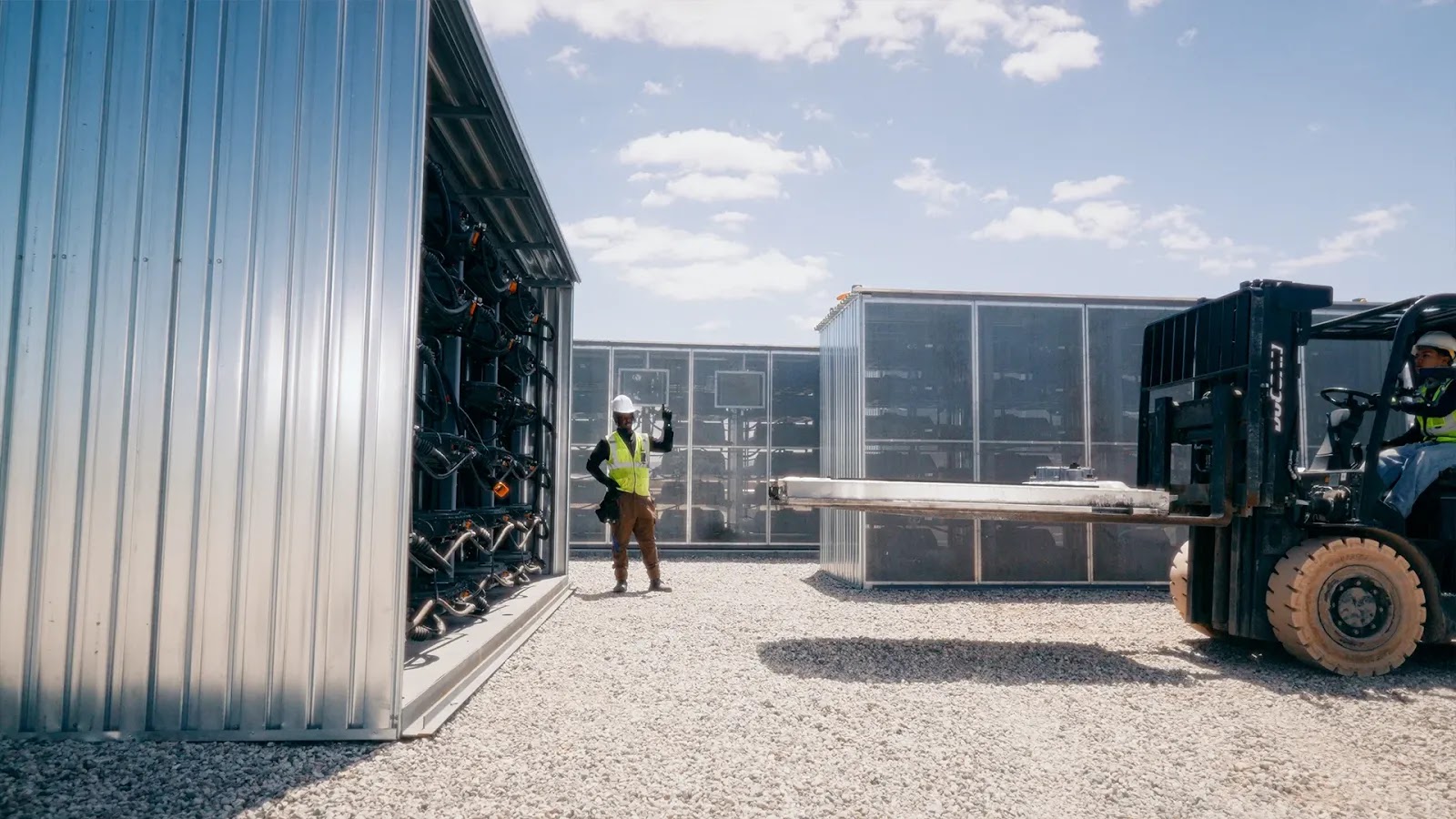
Waymo is expanding the role of its electric vehicle batteries beyond the road. In a new announcement, the autonomous mobility company says it is partnering with B2U Storage Solutions to repurpose batteries retired from its all-electric fleet as stationary energy storage.
The programme is designed to give the batteries a second use before they leave the energy system entirely. Rather than sending retired packs directly to recycling, Waymo says they will be integrated into grid-scale storage systems serving communities where the company operates. The first deployments will focus on Texas and California.
From vehicle power to grid support
Electric vehicle batteries do not necessarily become unusable when they are no longer suitable for demanding automotive service. Stationary storage can place different requirements on a battery because it does not need to deliver the same combination of acceleration, packaging efficiency, vibration resistance and rapid power changes expected in a road vehicle.
That distinction is central to Waymo and B2U’s plan. B2U specialises in using its technology to integrate retired EV batteries into large stationary systems. According to Waymo, those systems can absorb surplus renewable electricity during periods of high production and release it when demand rises. In practical terms, the batteries become a buffer between when electricity is generated and when it is needed.
The approach does not turn a retired vehicle battery into a new car battery. It changes the application. Packs that have reached the end of their useful automotive life can potentially continue supporting the electricity network in a less mobile, more controlled environment.
A programme linked to Waymo’s electric fleet
Waymo says the partnership will deploy hundreds of megawatts of storage capacity across the grids serving its cities. The company has not published a project-by-project schedule, a battery count or a detailed capacity breakdown, so the announcement should be read as a strategic programme rather than a report of completed installations.
The first focus on Texas and California reflects Waymo’s existing operating footprint and the energy conditions described in its announcement. Waymo points to California’s growing periods of clean electricity and Texas’s expansion of solar generation as examples of markets where additional storage can help balance supply and demand.
That role matters because renewable generation is not always aligned with consumption. Solar output typically peaks during daylight hours, while electricity demand can remain high later in the day. Storage can shift some energy from one period to another, reducing the gap between production and demand. Waymo presents its retired batteries as one potential resource in that wider balancing effort.
Why second-life batteries matter
Battery manufacturing carries environmental and material costs, which makes the useful life of an electric vehicle battery an important part of the wider mobility transition. Keeping a battery in service for a second application can extend the value of the materials and energy already invested in producing it.
For fleet operators, the idea is especially relevant. A large electric fleet creates a predictable stream of batteries that will eventually be removed from vehicles, even when those batteries may still have value in another setting. Waymo’s announcement connects vehicle maintenance, battery retirement and stationary storage in a single lifecycle strategy.
The company says the programme builds on its maintenance work to extend vehicle life and durability. It also frames the partnership as part of a broader circular-economy effort: electric mobility is not only about replacing combustion engines with electric drivetrains, but also about managing batteries responsibly after their first use.
There are still practical questions to resolve. A second-life project must assess the condition, chemistry, remaining capacity and safety characteristics of individual battery packs. It also needs systems for transport, monitoring, thermal management and eventual end-of-life processing. Waymo’s announcement confirms the partnership and its intended deployment regions, but it does not provide the technical acceptance criteria or operating timetable for each battery system.
What the announcement means for electric mobility
The partnership highlights a shift in how automakers and electric fleet operators may think about batteries. A battery’s first life determines how it performs on the road, but its overall value may extend beyond the vehicle. Stationary storage offers a route for retaining some of that value while supporting a grid that is adding more variable renewable generation.
It also illustrates why the environmental performance of electric mobility cannot be measured only at the point of use. The vehicle, the battery supply chain, the electricity network and the end-of-life pathway are connected. A battery that supports a vehicle during its first life and later helps store renewable electricity has a different lifecycle profile from one that is discarded immediately after automotive service.
Waymo and B2U have not presented the programme as a replacement for battery recycling. Recycling remains an important end-of-life route for recovering materials when a battery is no longer suitable for further use. The immediate objective described by Waymo is to insert an additional stage between vehicle retirement and final processing, provided the batteries meet the safety and performance requirements of stationary storage.
For now, the significance of the announcement lies in that structure. Waymo is treating retired EV batteries as an energy asset rather than simply as a waste stream, while B2U supplies the storage technology intended to put them back to work. The first deployments in Texas and California will show how effectively that model can move from a fleet sustainability policy to operating grid infrastructure.